Applications advisor

Describe the job. Get the best-fit process.

Tell us what you are trying to do and the advisor will narrow the page to the right sections and systems.

01

Tell us the job

Material, part size, mark or cut goal, finish expectations, and whether this is prototyping or production.

02

Get process guidance

Compare UV, MOPA, picosecond, and SynchroScan against your actual constraints.

03

Move to the right system

Recommendations link directly to the matching panel and product pages.

Work email is required so the team can follow up with system suggestions.

AI Powered Advisor

Tell us what you want to do

Email required

Tell me the material, what you need the laser to do, the finish you care about, and any throughput or automation constraints. I'll suggest the best-fit process family and the next panels to open.

355nm Precision

UV

Marks glass, metal, silicone, plastics, wood, granite — almost any material. Slower than MOPA for metals and not as black, but unmatched versatility on heat-sensitive and mixed-material parts.
Fine spot size Low thermal load Glass and plastics Premium cosmetic marks
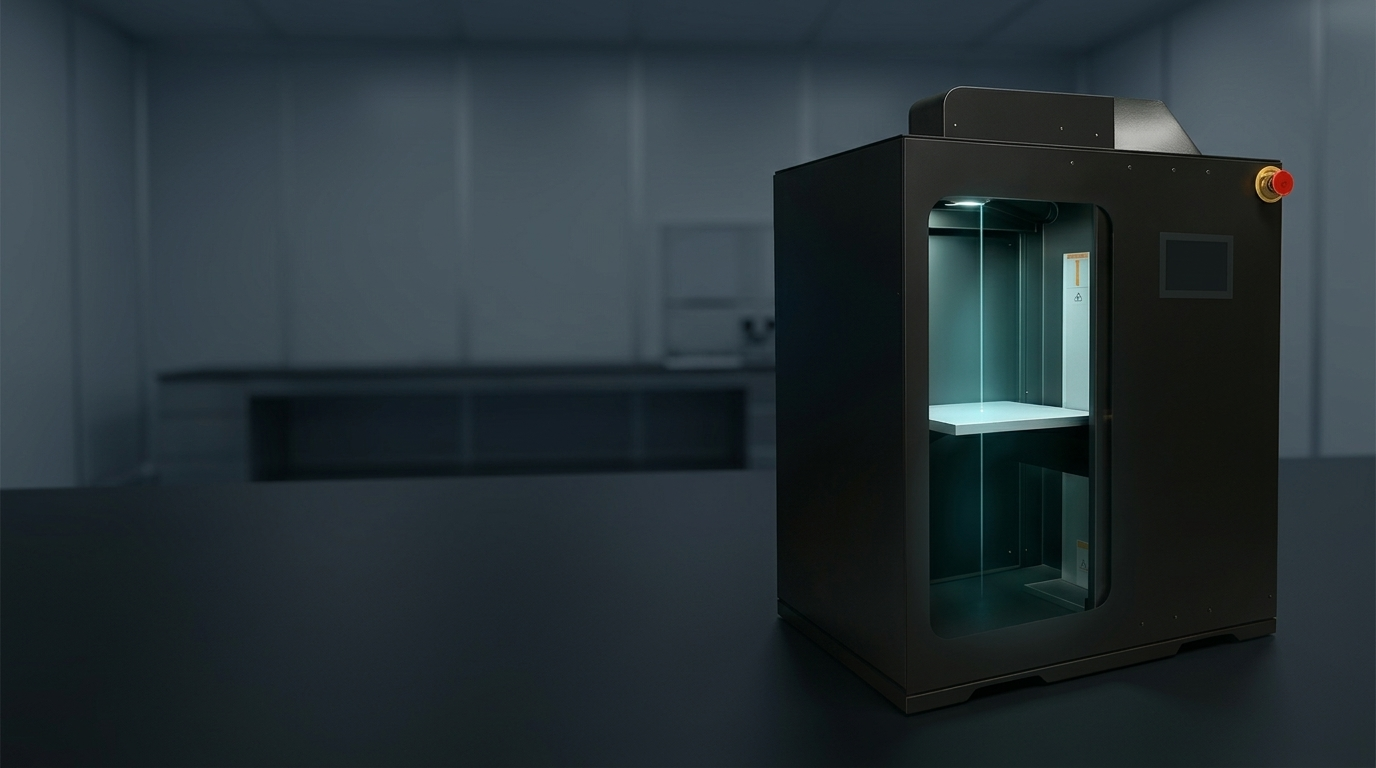
FSL Unmei Compact UV laser system

Why teams choose UV

  • 30x smaller spot size than CO2 for ultra-fine detail
  • Cold marking with less visible heat damage
  • Strong fit for clear and dark plastics, glass, and coated surfaces
  • Standard galvo field ~4"x4" with F160 lens; with SynchroScan the work area is unlimited as material moves under the lens

UV's 355 nm wavelength produces a spot size roughly 30x smaller than CO2, enabling fine detail that isn't possible with longer wavelengths. Standard galvo systems are limited to about a 4"x4" field with an F160 lens, but FSL's SynchroScan platform removes that constraint — the material travels beneath the lens so the effective work area is unlimited. Applications span black and clear acrylic, leather, stainless, paper, glass, brass, copper, anodized aluminum, stone, marble, PCB processing, silicone, and 3D crystal engraving.
Best fit

  • Medical, electronics, consumer packaging, and premium branding
  • Transparent, fragile, or heat-sensitive parts
  • Fine logos, QR codes, micro text, and cosmetic surface work

Common materials

  • Acrylic, polymers, silicone, paper, leather
  • Glass, crystal, ceramics, stone, marble
  • Brass, copper, anodized aluminum, and coated metals

Typical outputs

  • Sharp contrast marks on clear and dark plastics
  • Glassware and crystal engraving
  • PCB processing, personalization, and decorative marking

UV Application Samples

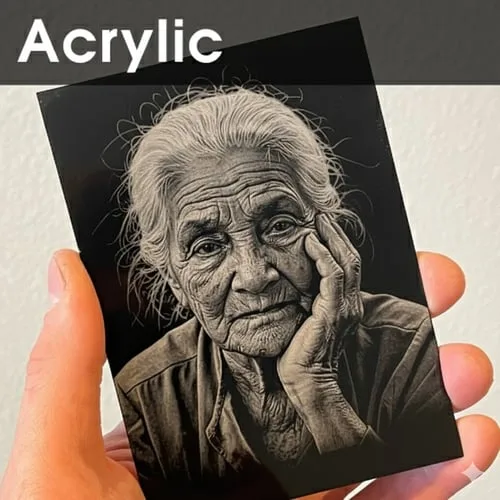
UV black acrylic

Black Acrylic

High-contrast white marks without melting. Panels, signage, and instrument bezels.

UV clear acrylic

Clear Acrylic

Sub-surface marks with no frosting or heat haze. Awards, displays, and light guides.
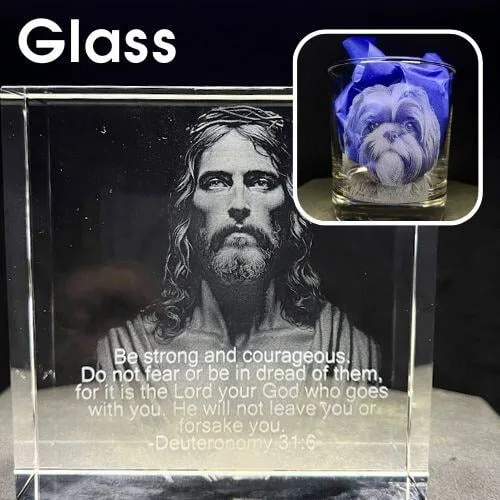
UV glass engraving

Glass Engraving

Fine detail on flat and curved glassware with clean edges.
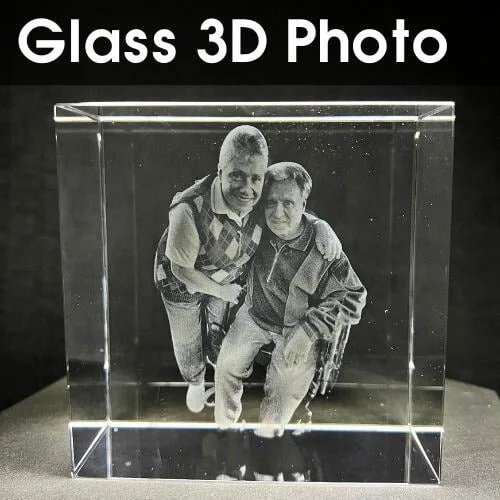
UV 3D crystal

3D Crystal

Sub-surface 3D engraving inside crystal blocks for personalization.
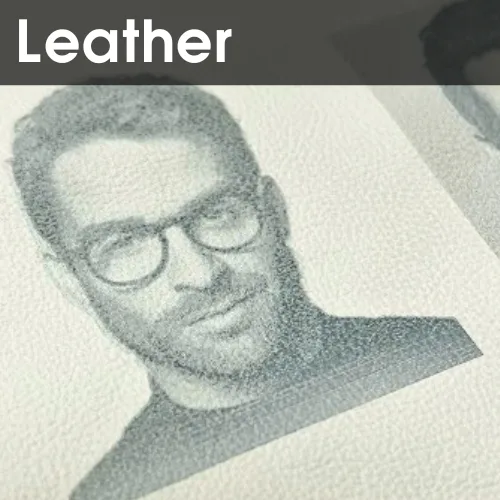
UV leather

Leather

Marking and cutting on natural and synthetic leather without charring.
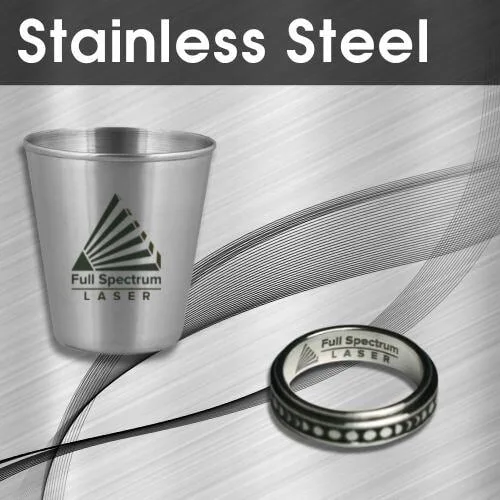
UV stainless

Stainless Steel

Clean marks on stainless for serial numbers, barcodes, and branding.
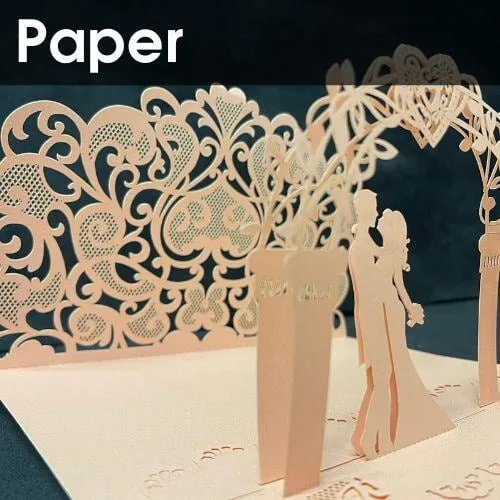
UV paper cutting

Paper Cutting

Intricate die-less cutting of paper, cardstock, and thin films.
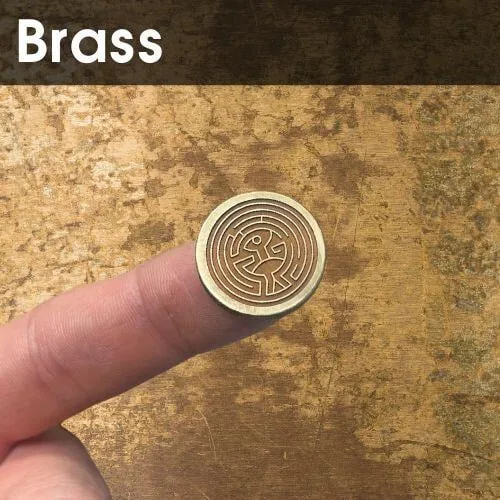
UV brass

Brass

Deep logo engraving on brass nameplates and decorative hardware.
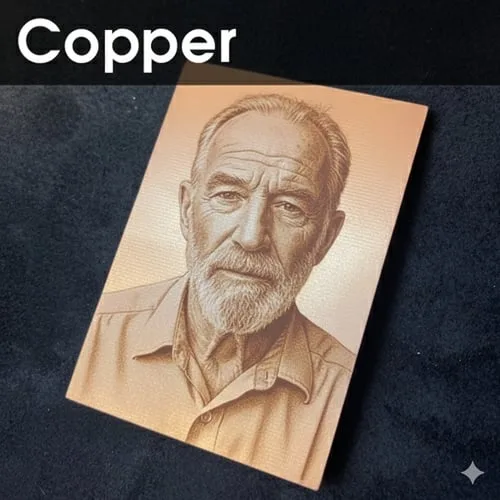
UV copper

Copper

Precise marking on copper for electronics, nameplates, and decorative applications.
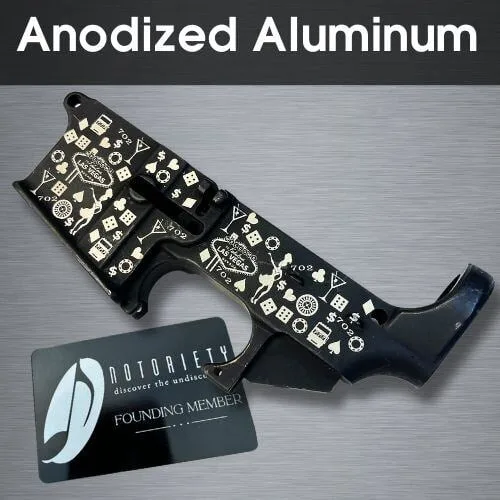
UV anodized aluminum

Anodized Aluminum

High-contrast marks revealing bare metal for tags, panels, and labeling.
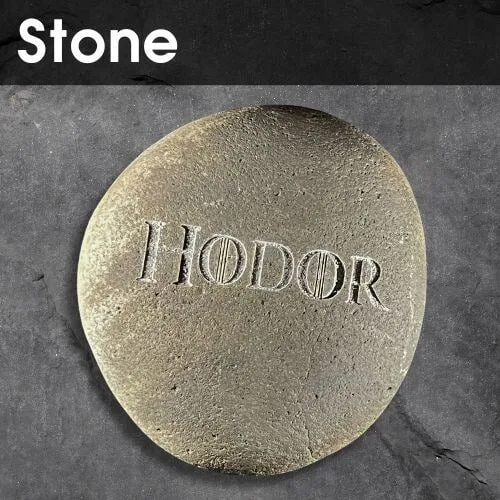
UV stone

Stone & Marble

Photo-realistic engraving on granite and marble for memorials and awards.
UV wood

Wood

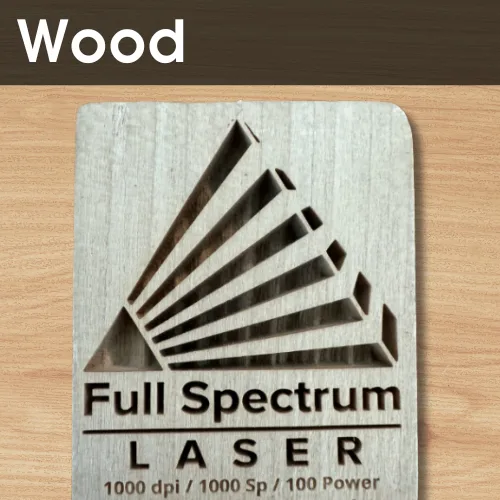
Deep logo engraving on hardwood, plywood, and bamboo with minimal charring.
UV golf ball

Golf Balls

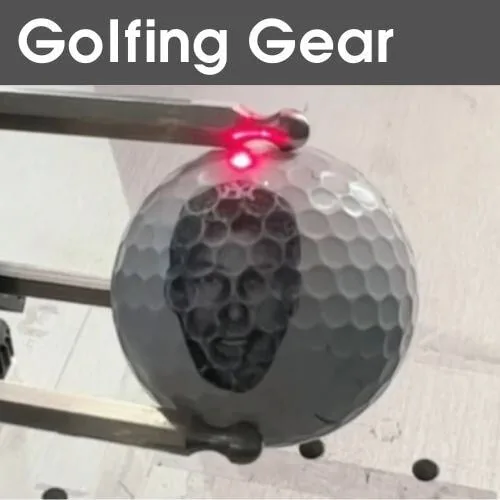
Precision marking on golf balls and spherical surfaces using rotary fixtures for personalization and branding.
UV PCB

PCB Processing

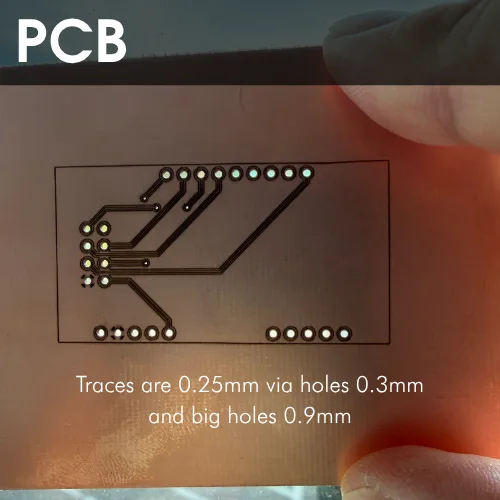
Engrave isolation paths, drill holes/vias, cure solder mask all on the same laser.
UV PVC

PVC & Polymers

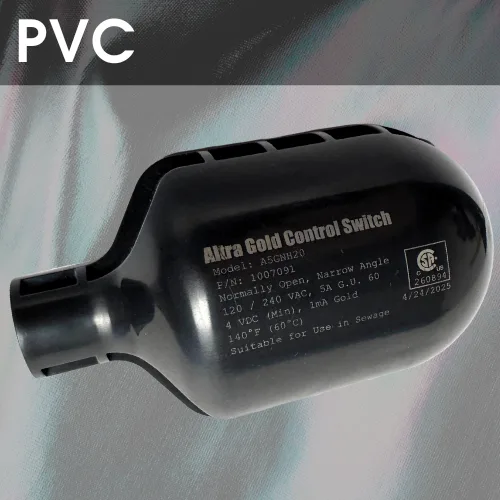
Medical-grade plastics, silicone, polyamide, and consumer packaging.
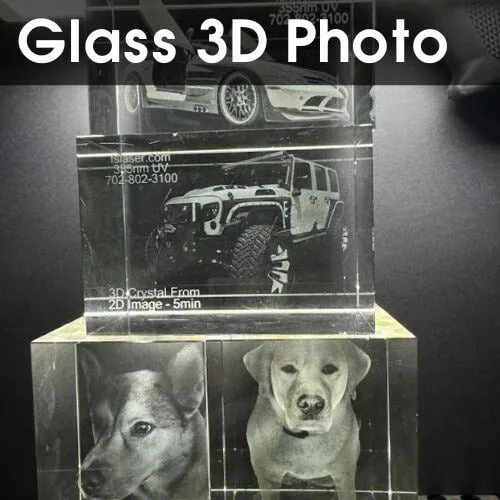
UV 3D crystal cars

3D Crystal Vehicles

Sub-surface vehicle models inside crystal for automotive gifts and awards.
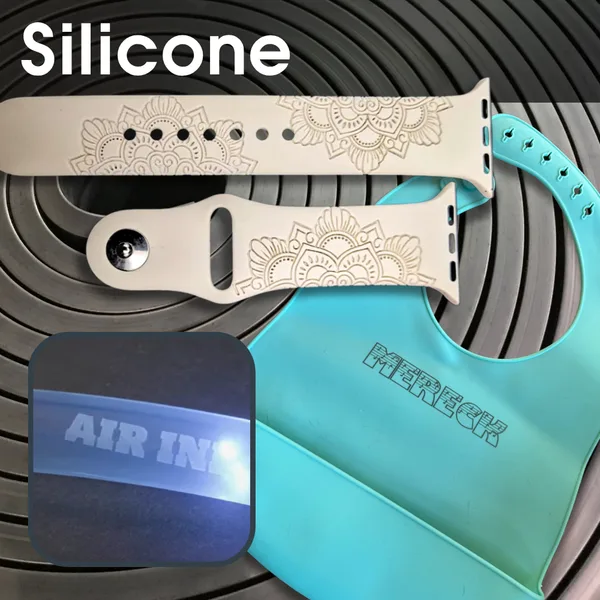
UV silicone engraving

Silicone

Engraving on silicone watch bands, bibs, and flexible products. UV's cold process marks without melting or deforming the material.
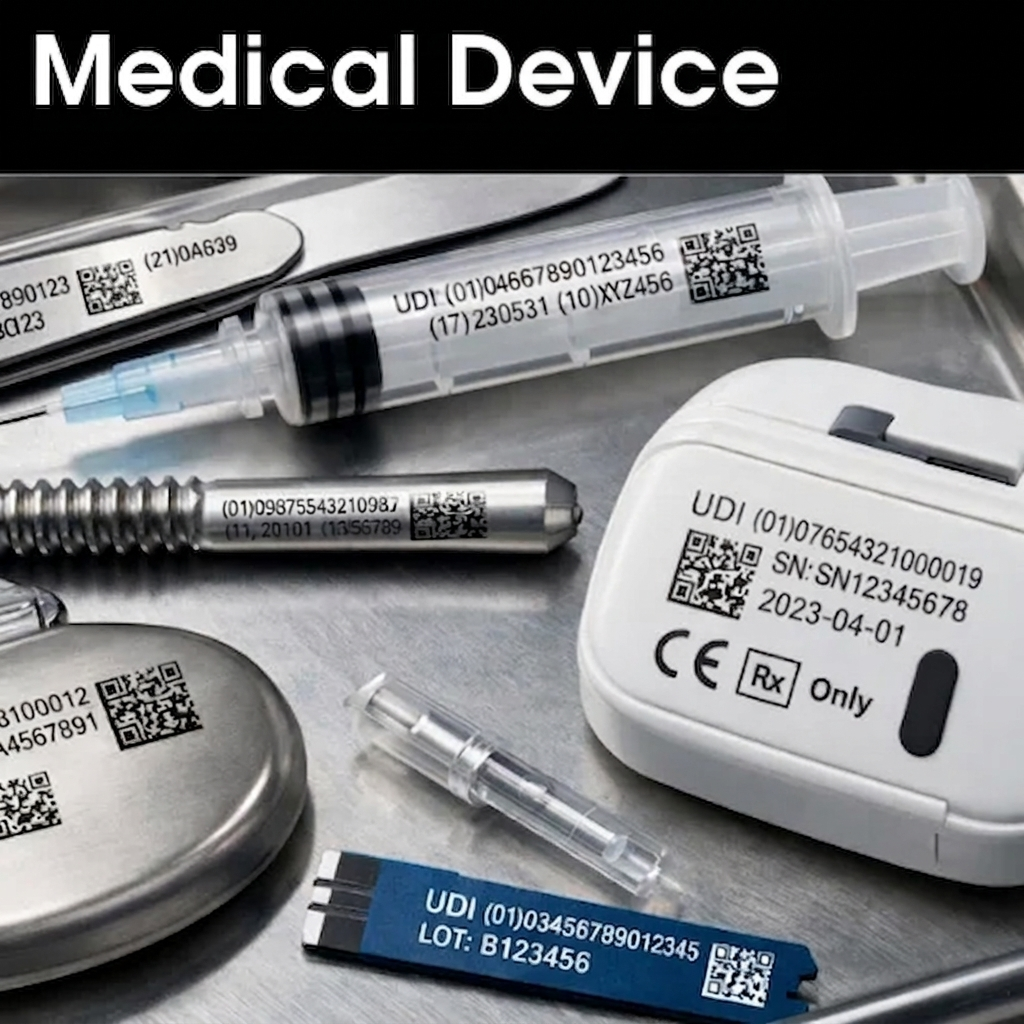
UV medical device marking

Medical Device

Permanent UDI marking on syringes, surgical instruments, and implants. UV's fine spot and low heat meet FDA traceability requirements.
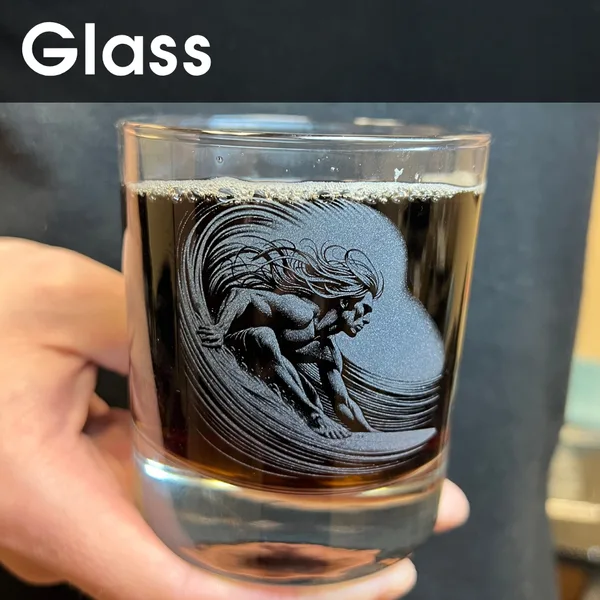
UV glass cup surfer engraving

Glass Cup — Surfer

Photo-realistic surfer engraving on a whiskey glass. UV produces fine detail on curved glass surfaces with rotary attachment.
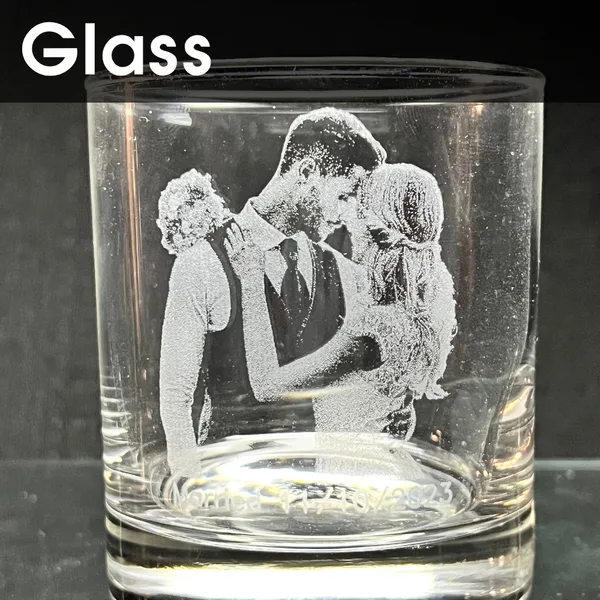
UV glass cup wedding engraving

Glass Cup — Wedding

Wedding photo engraved on glass for personalized gifts and keepsakes. Fine grayscale detail captured on curved surfaces.
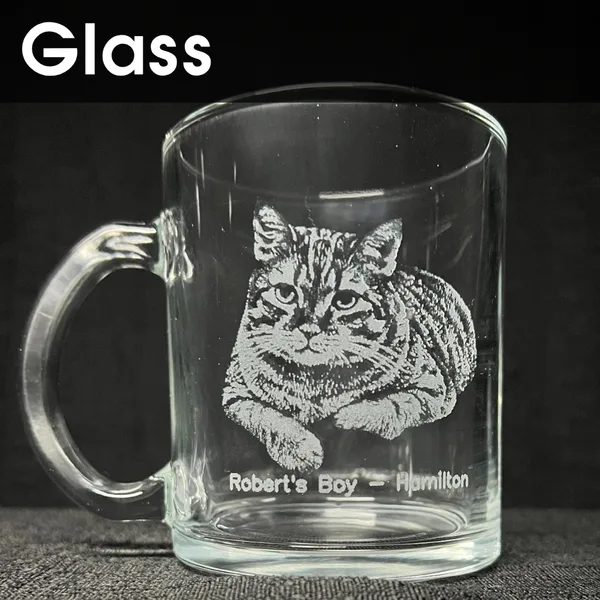
UV glass mug cat engraving

Glass Mug — Pet Portrait

Detailed pet portrait engraved on a glass coffee mug with personalized text. Popular for custom gift businesses.
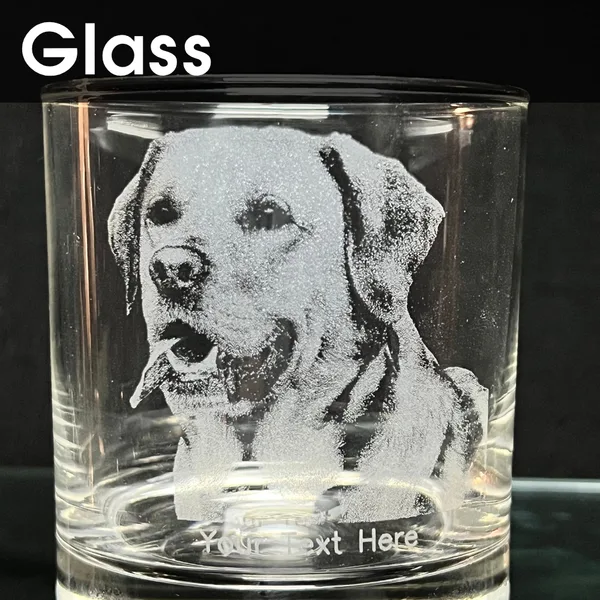
UV glass dog engraving

Glass — Dog Portrait

Photo-quality dog portrait on a whiskey glass with custom text. UV produces smooth grayscale gradients on glass.
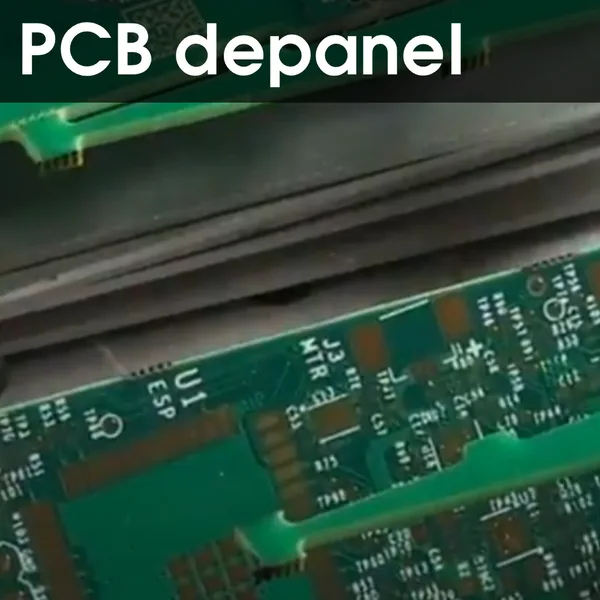
UV PCB depaneling

PCB Depaneling

UV laser cutting for PCB depaneling — separating individual boards from panels with no mechanical stress or dust.
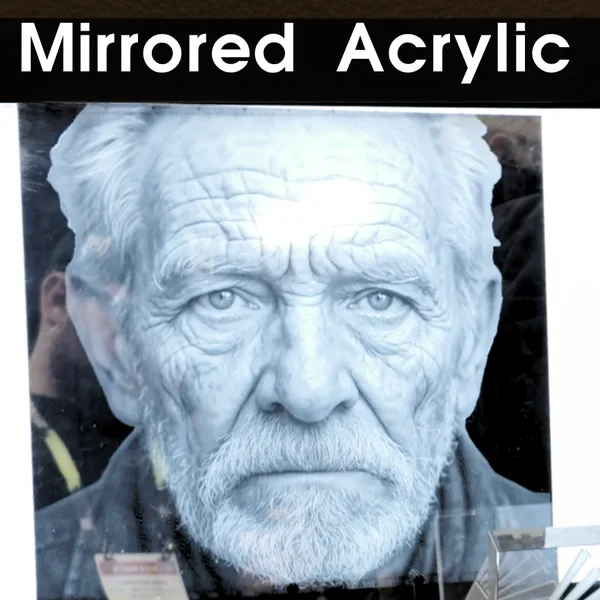
UV mirrored acrylic engraving

Mirrored Acrylic

Photo-realistic portrait engraved on mirrored acrylic. UV removes the mirror coating to reveal detail with stunning contrast.
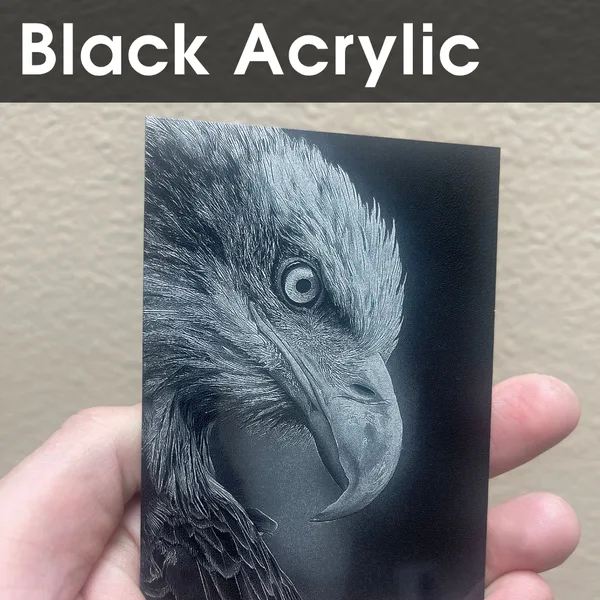
UV black acrylic eagle

Black Acrylic — Eagle

Photo-quality eagle portrait engraved on black acrylic. White marks reveal fine feather detail with no heat distortion.
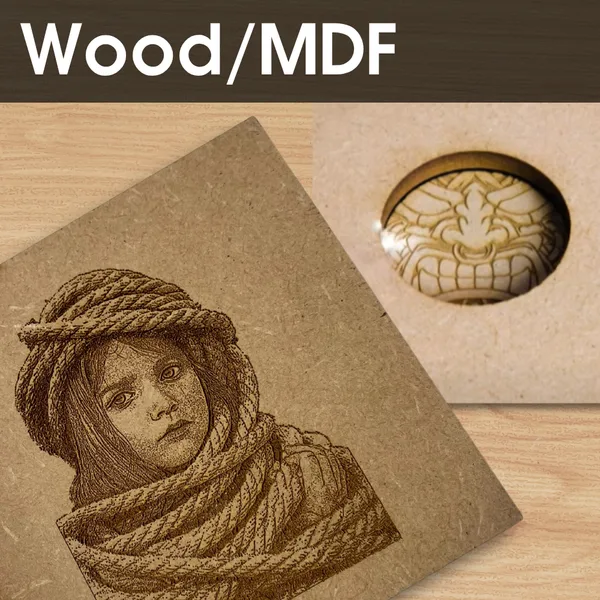
UV wood and MDF engraving

Wood & MDF

Photo-realistic portrait and detail engraving on wood and MDF. UV's fine spot produces higher resolution than CO2 on wood.
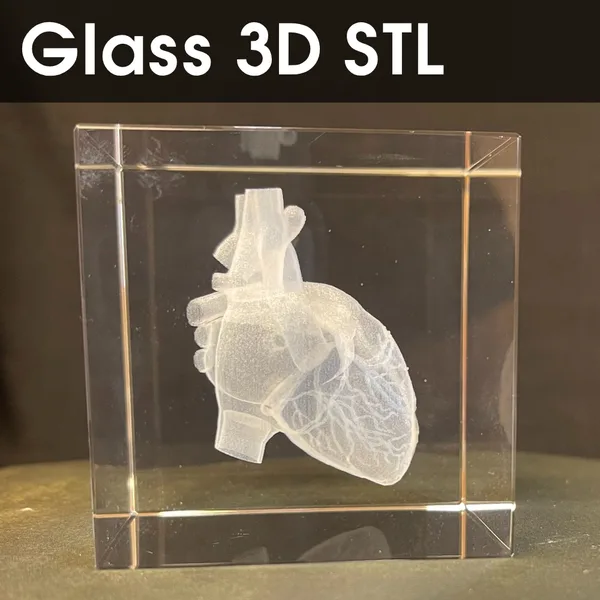
UV 3D crystal heart

3D Crystal — Anatomical Heart

Detailed anatomical heart model engraved inside crystal from STL data. Medical education and gift applications.
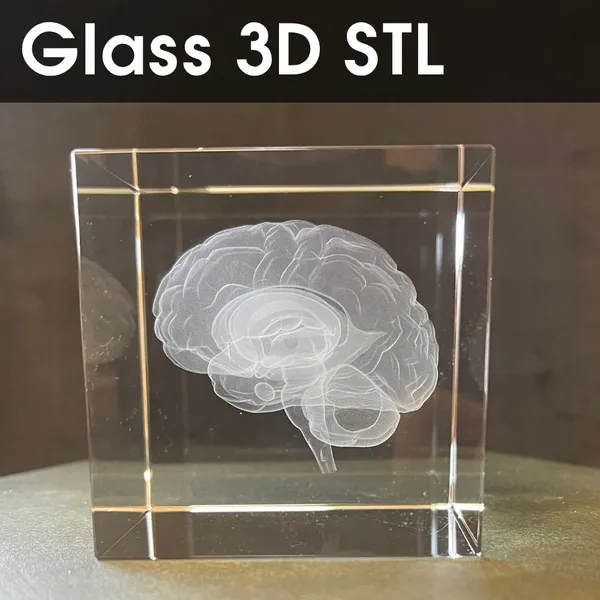
UV 3D crystal brain

3D Crystal — Brain

Sub-surface brain model engraved in crystal from 3D scan data. Scientific visualization and personalized gifts.

1064nm MOPA Fiber

MOPA

Specialty for metals. MOPA pulse control enables deep black marks, color on stainless, and high-contrast anodized aluminum — the best value for metal marking applications.
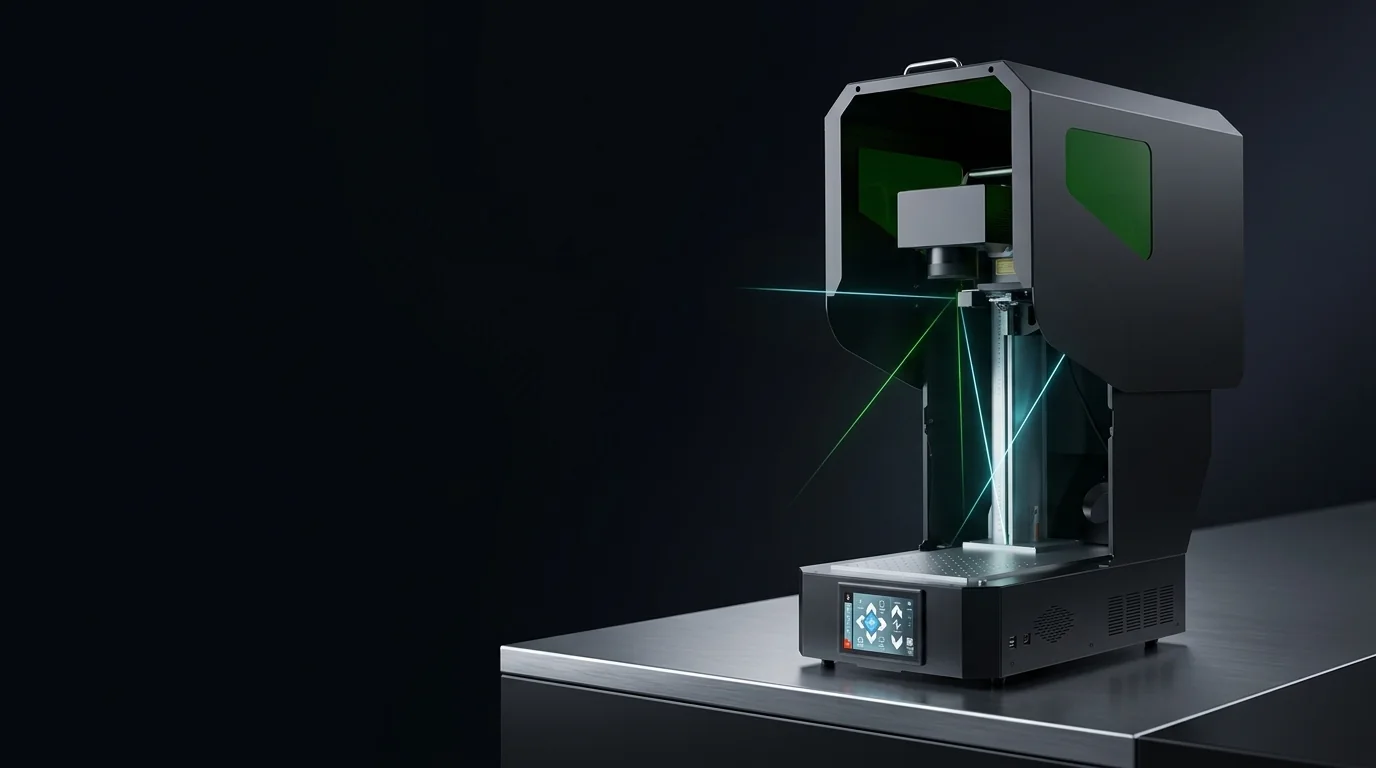
Adjustable pulse duration Black anodized aluminum Color on stainless Thin metal cutting
FSL MOPA fiber laser

What changes with MOPA

  • Adjustable pulse duration and frequency — unlike fixed-pulse Q-Switched
  • Higher peak power for deeper black and multicolor marks on metals
  • Higher-power models (100W-200W) cut thin metals
  • Not all MOPAs are equal — FSL offers shorter pulse widths with maintained energy. Ask an FSL engineer which type fits your application

MOPA stands for Master Oscillator Pulsed Amplifier — it lets you change both the repetition frequency and the pulse duration, unlike Q-Switched fiber lasers which have a fixed pulse width. That flexibility unlocks different peak energies for black marking on anodized aluminum, multicolor annealing on stainless, and thin-metal cutting at 100W-200W.

Not all MOPAs are the same. Low-cost MOPAs claim 2-500 ns pulse duration but at 2 ns the peak energy drops significantly — you can tell by the cutoff frequency in the datasheet. A MOPA with a 400 kHz cutoff at 2 ns means below 400 kHz it can't maintain rated average power. A MOPA with a 40 kHz cutoff at 2 ns will deliver roughly 10x the peak energy per pulse. FSL carries sources with shorter pulse widths that maintain energy. Talk to an FSL engineer to find the right source for your application.
Best fit

  • Permanent metal ID, premium branding, and serial marking
  • Shops that want engraving and light cutting on the same platform
  • Curved or irregular parts that benefit from 3D engraving

Common materials

  • Stainless, steel, aluminum, brass, and anodized aluminum
  • Select polymers and coated parts
  • Jewelry blanks, keys, tools, and precision components

Typical outputs

  • Deep black marks and color work on stainless
  • High-contrast branding on anodized aluminum
  • Small part cutting, curved 3D engraving, and rotary jobs

MOPA Application Samples

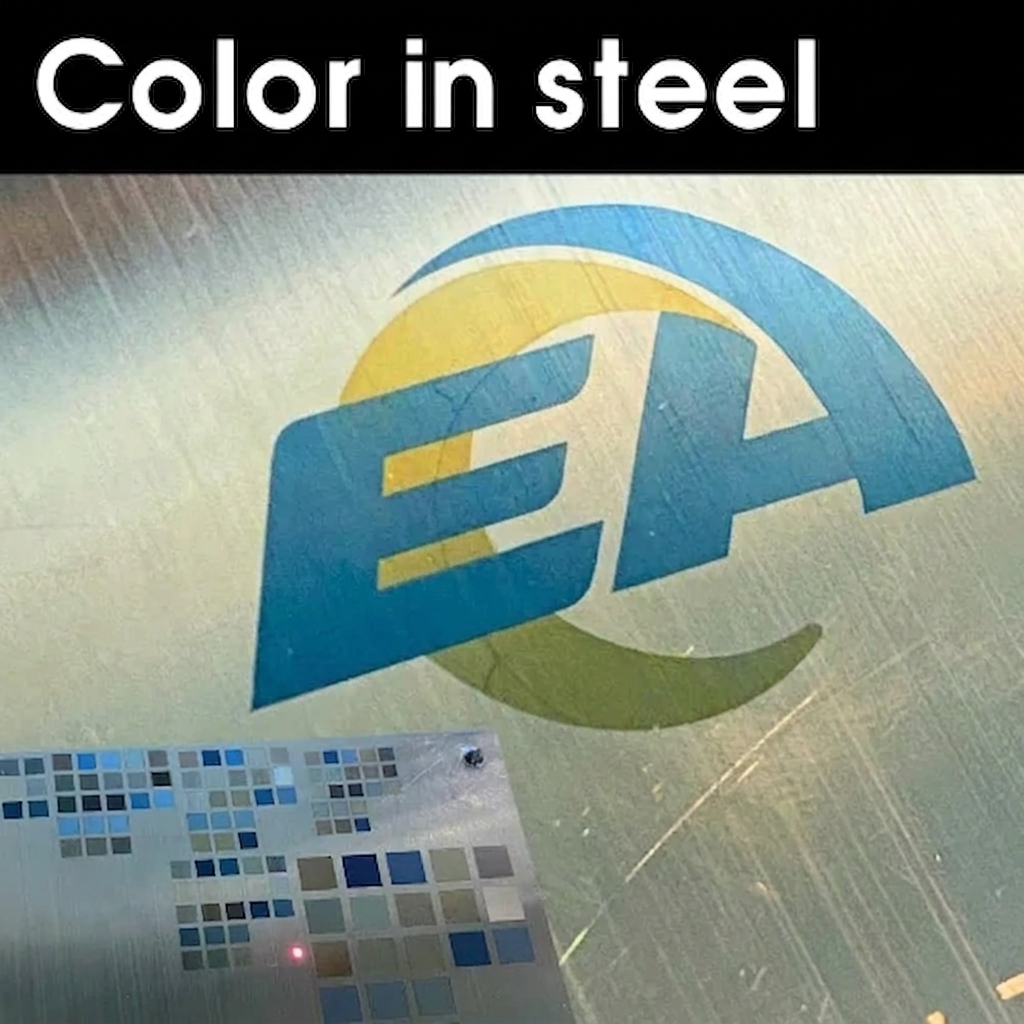
MOPA color on stainless

Color on Stainless

Annealed color marks via thin oxide layers. MOPA pulse control produces blues, golds, and greens through thin-film interference.
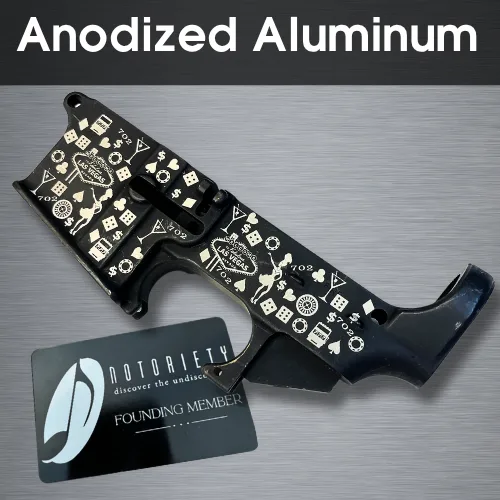
MOPA black anodized

Black Anodized Aluminum

High-contrast dark and white marks. Short pulses strip the anodized layer cleanly for branding and barcodes.
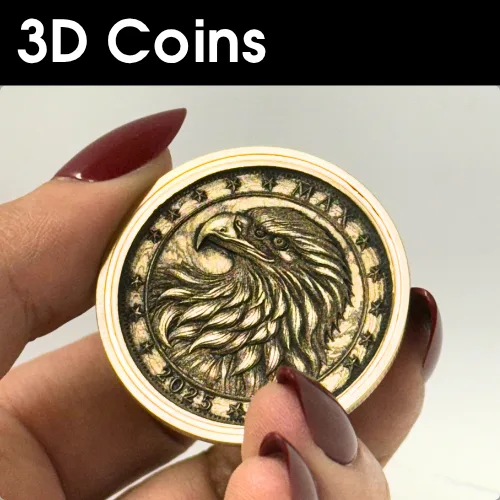
MOPA 3D coins

3D Deep Engraving

Multi-pass deep engraving for coins, medallions, and molds. Layer-by-layer removal for true 3D relief.
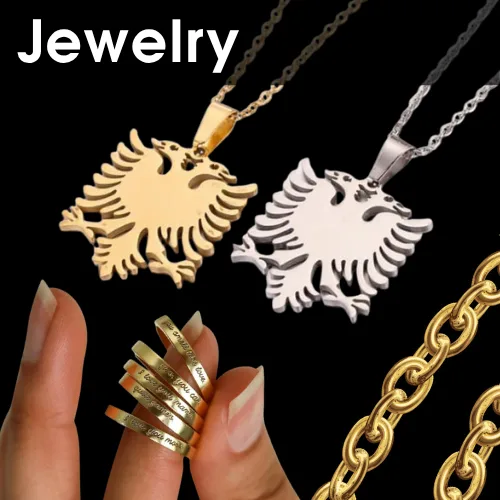
MOPA jewelry

Jewelry

Fine detail on gold, silver, and stainless. Pendants, rings, and chain links with no thermal distortion.
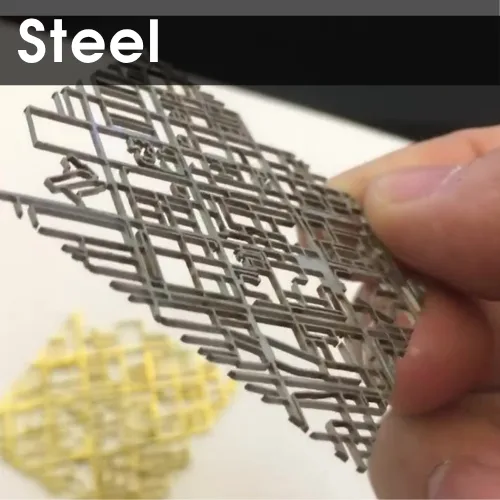
MOPA steel cutting

Thin Metal Cutting

100W-200W MOPA cuts intricate patterns in thin stainless and steel sheet.
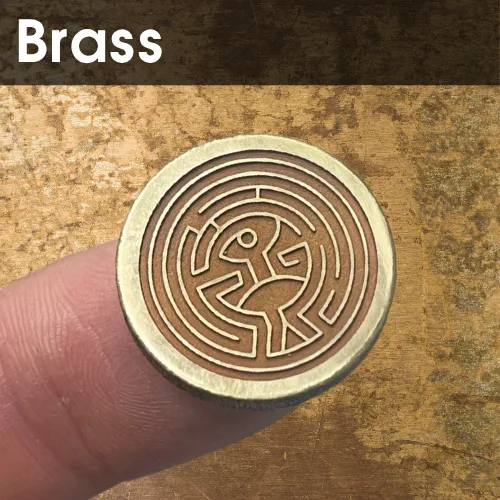
MOPA brass

Brass

Deep engraving on brass nameplates, decorative hardware, and precision components.
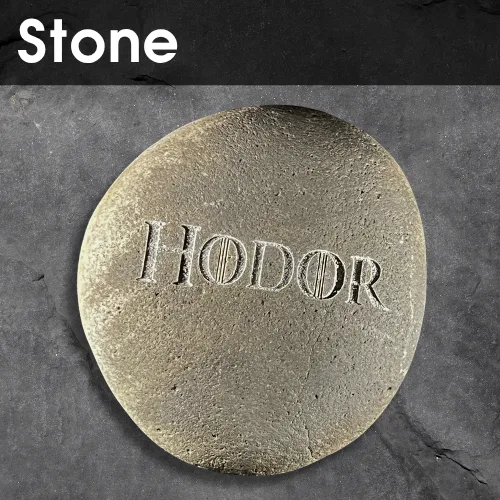
MOPA stone

Natural Stone

Text and logo engraving on stone for personalized gifts and decorative items.
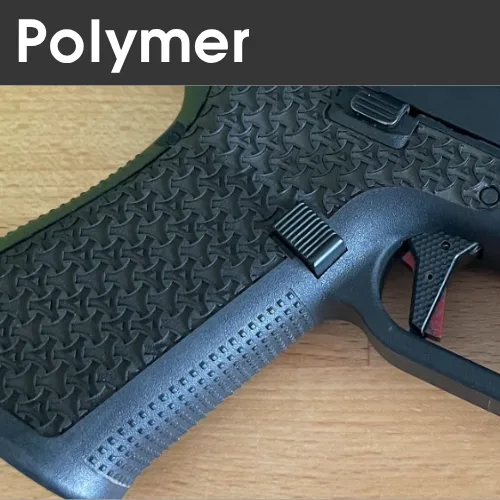
MOPA polymer

Polymer Marking

Textured stippling on grips and housings without material removal or weakening.
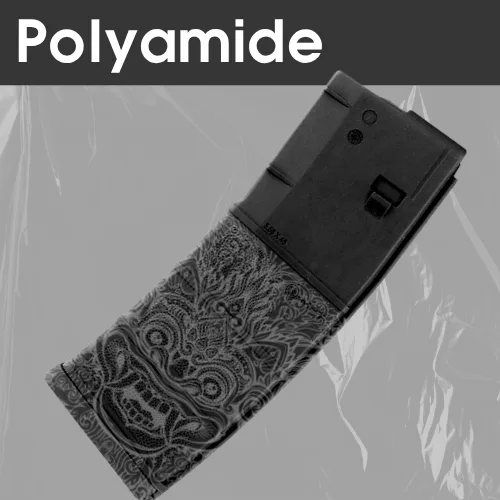
MOPA polyamide

Polyamide & Nylon

Serial numbers and detailed graphics on technical polymer components.
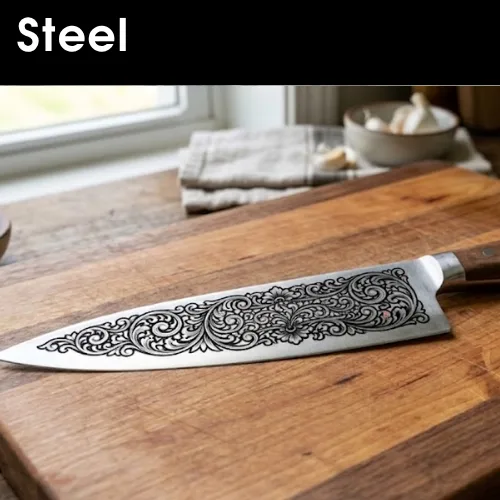
MOPA knife engraving

Knife Engraving

Detailed pattern engraving on steel knife blades. MOPA pulse control creates Damascus-style texture patterns on hardened steel.
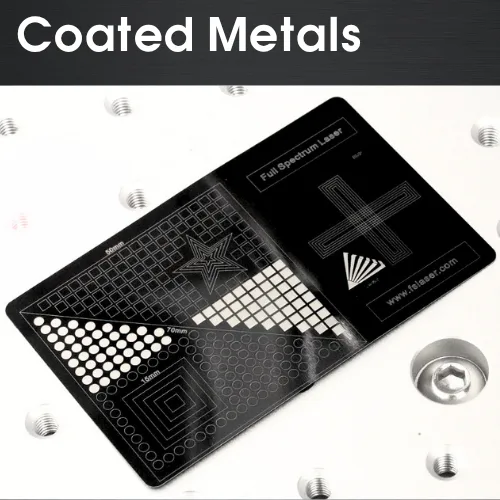
MOPA coated metal test card

Coated Metal Test Card

Precision test patterns on coated metal showing different mark densities and halftone capabilities for quality validation.
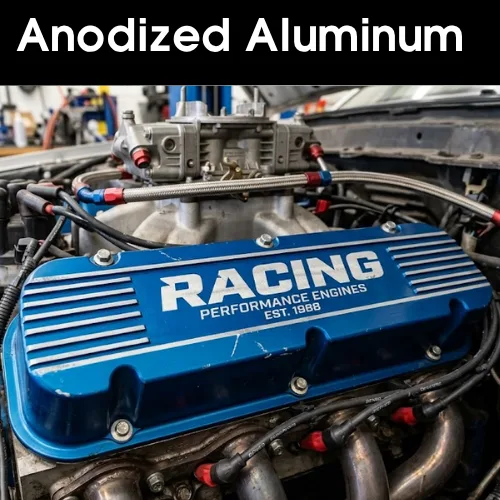
MOPA anodized aluminum racing

Anodized Aluminum — Racing

Large-format marking on anodized aluminum engine valve covers. MOPA strips the anodized layer for high-contrast branding on automotive parts.
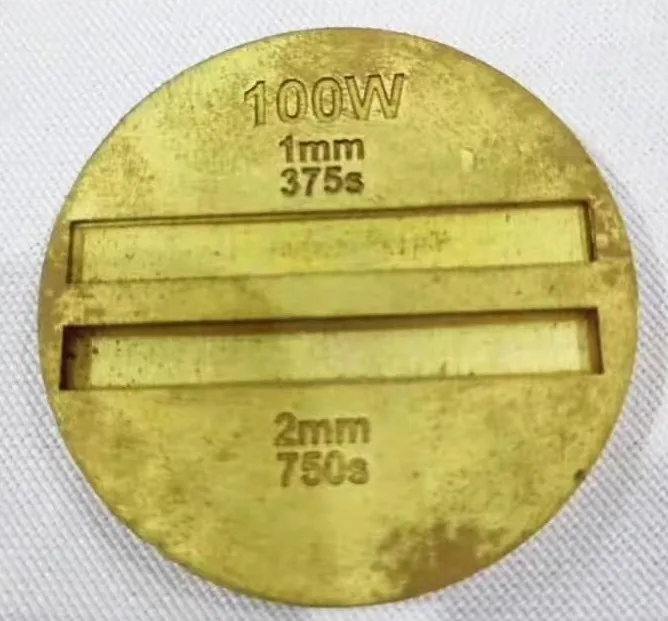
MOPA copper deep engraving

Copper Deep Engraving

100W MOPA cuts 1-2mm channels into solid copper. Test disc shows precision depth control at different pass counts.
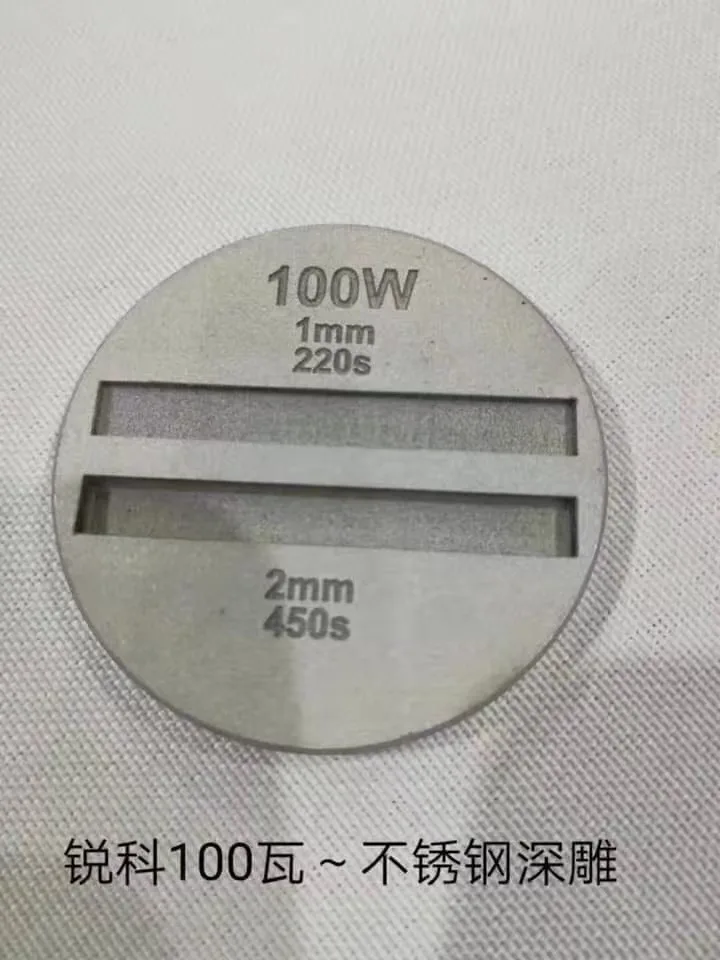
MOPA deep stainless steel

Deep Stainless Steel

Multi-pass deep engraving into solid stainless steel. 100W source removes material layer by layer for mold and die applications.
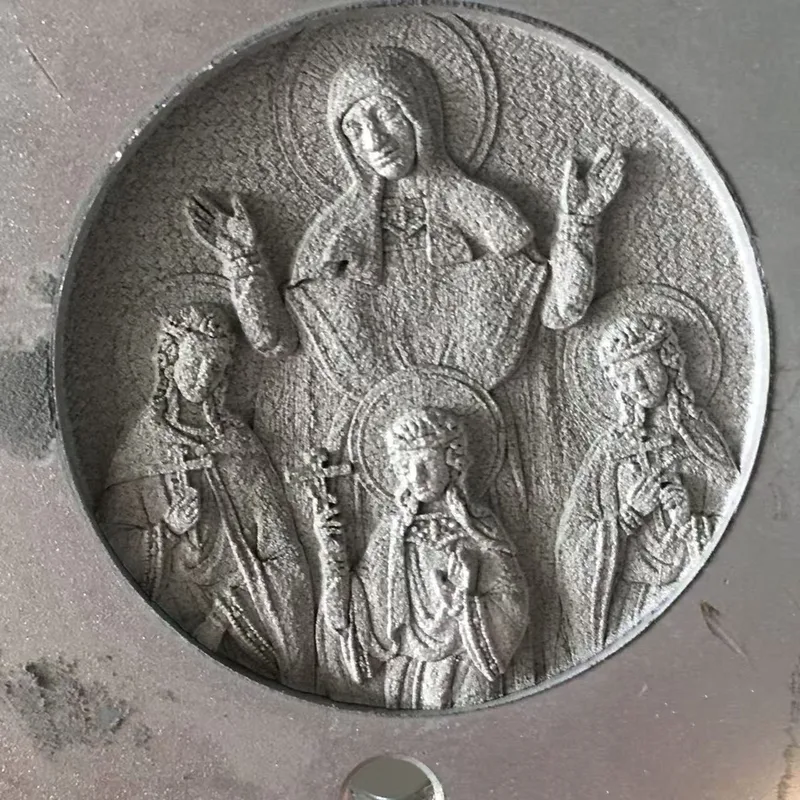
MOPA medal relief engraving

Medal & Coin Relief

Full 3D bas-relief engraving on aluminum. Multi-pass removal creates museum-quality medallions with fine detail in faces and drapery.
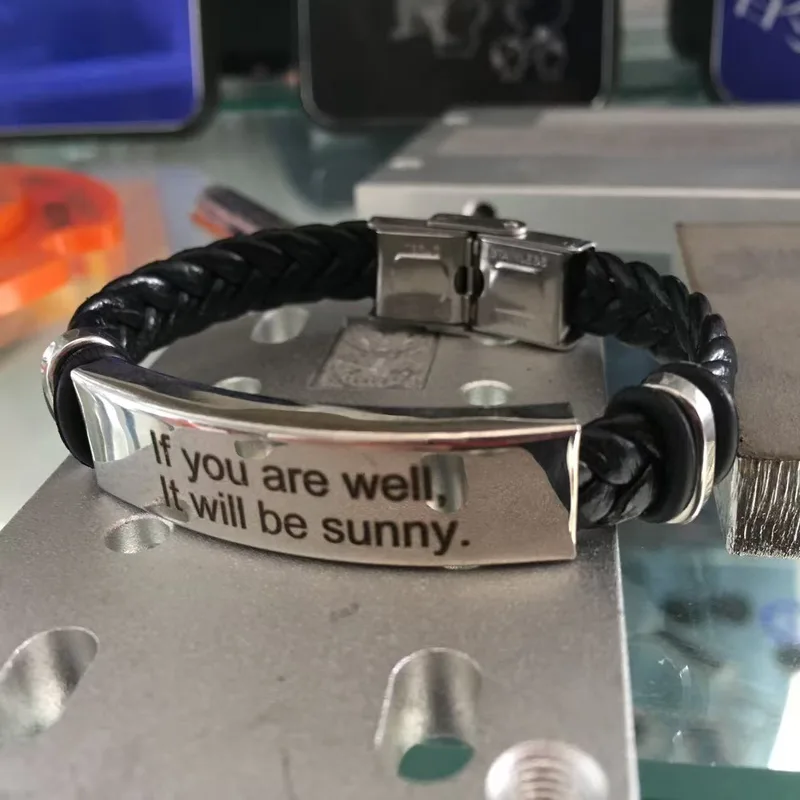
MOPA bracelet engraving

Bracelet Engraving

Personalized text marking on stainless steel bracelet plates. Clean, permanent marks on wearable jewelry without affecting the finish.
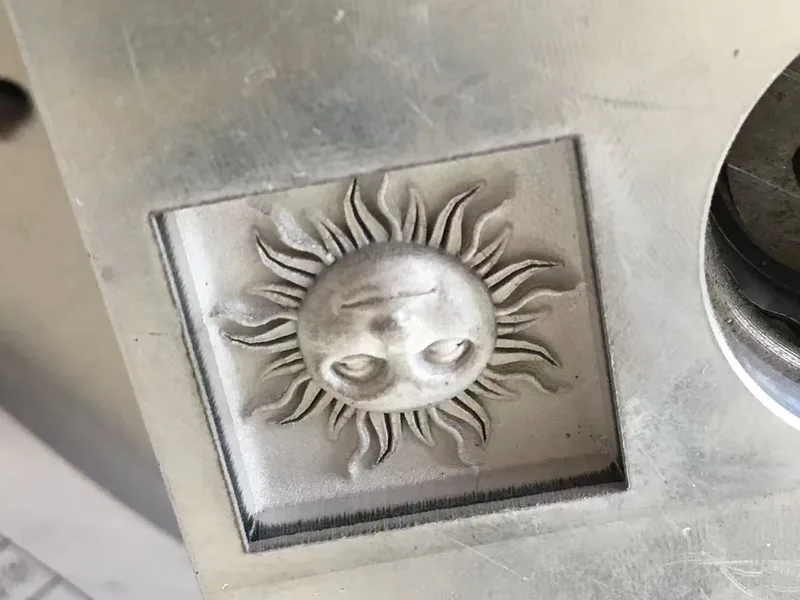
MOPA artistic relief engraving

Artistic Relief

Detailed koi fish relief engraved into aluminum plate. MOPA pulse control produces smooth gradients and fine texture in 3D artwork.
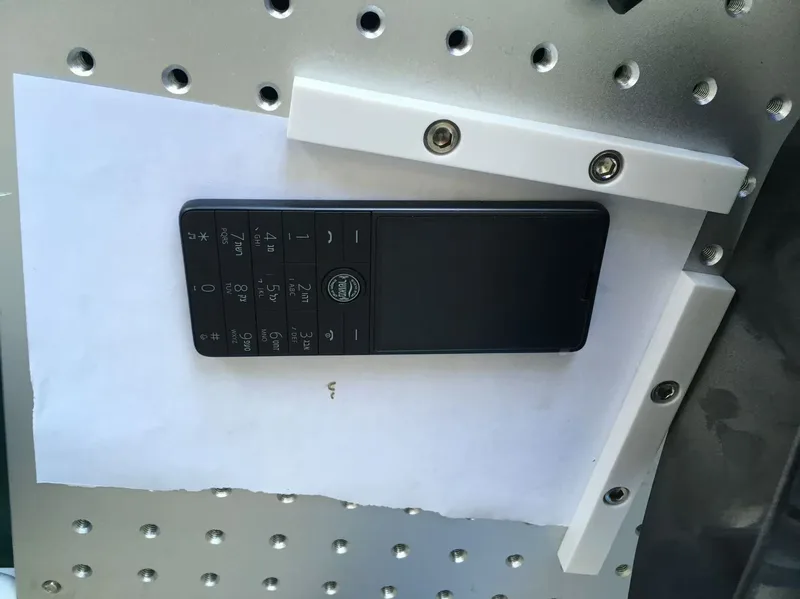
MOPA PVC plastic marking

PVC & Plastic Parts

Keypad and housing marking on PVC and ABS plastics. MOPA parameters tuned for contrast without melting or deforming thin-wall parts.

Short-Pulse Glass Processing

Picosecond

Choose picosecond for brittle substrates and glass work that needs a tighter process window, cleaner edge behavior, and more control than thermal cutting can deliver.
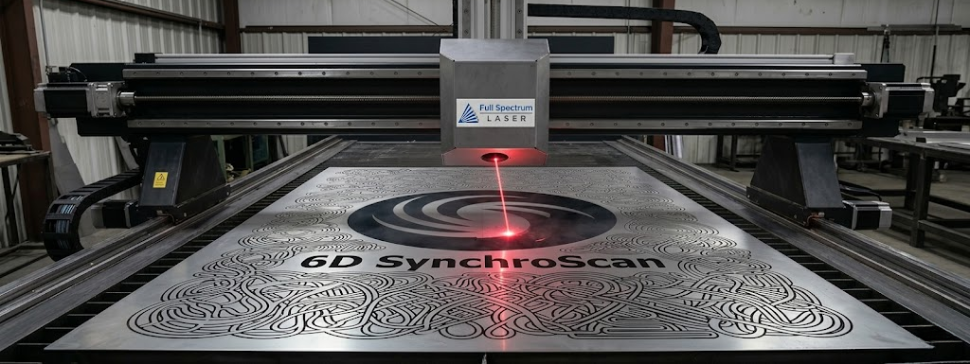
Glass cutting Brittle substrates Fine feature control Advanced materials
FSL picosecond glass cutting laser

Where it fits

  • Glass workflows where edge quality and part value justify controlled processing
  • Cutouts, slots, micro features, and precision separation paths
  • Technical substrates where cracking risk matters

FSL's picosecond offering is positioned around glass cutting. Short-pulse processing belongs in brittle-material workflows where clean geometry, tighter heat control, and less post-process handling carry real value.
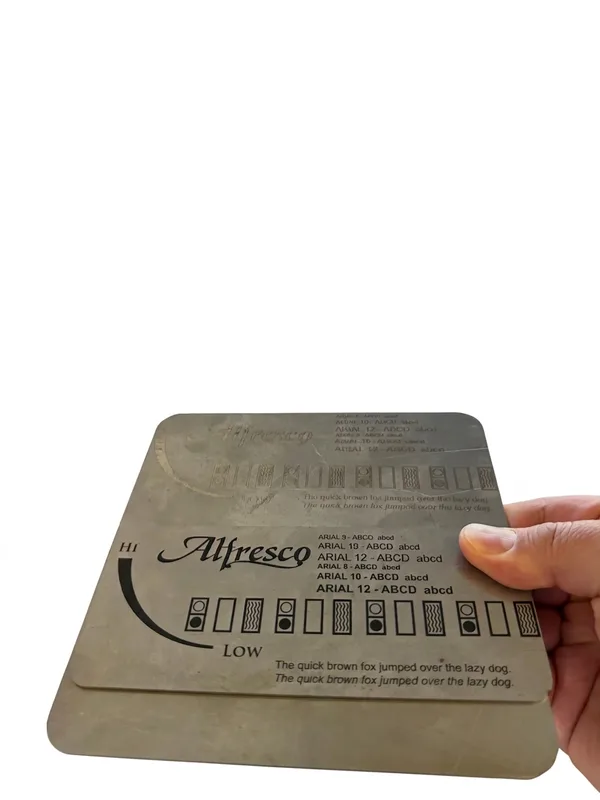
Best fit

  • Display, optics, labware, and specialty glass workflows
  • Parts with tight profiles, slots, holes, or edge-quality requirements
  • High-value substrates where process stability matters

Common materials

  • Glass sheets, windows, and technical glass
  • Brittle transparent substrates
  • Advanced material stacks where thermal control matters

Typical outputs

  • Glass profiles, cutouts, and precision separation paths
  • Micro-feature preparation before downstream assembly
  • Clean-edge glass processing for high-spec production

Picosecond Application Samples

MOPA vs picosecond comparison

MOPA vs Picosecond

Same stainless plate. Top (MOPA) fades at angle — relies on thin oxide layer. Bottom (picosecond) stays black at every angle — surface is physically restructured to absorb light.
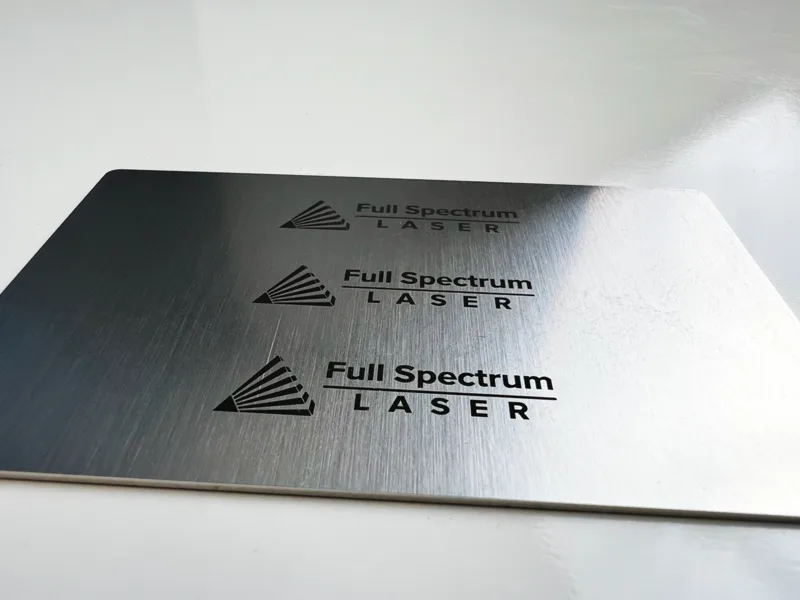
Pico black on stainless

Deep Black on Stainless

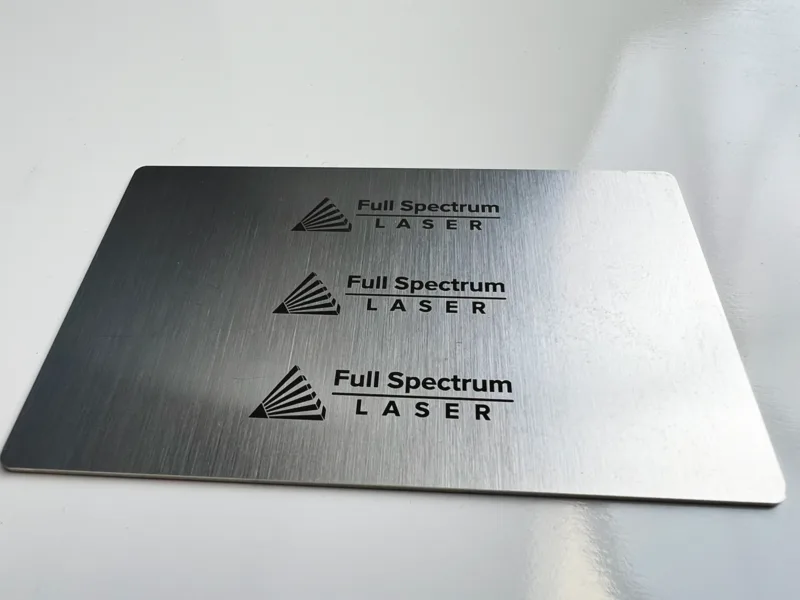
Primary picosecond application: ultra-durable black marks. Surface restructuring absorbs light — blacker at all angles, won't rub off like annealed MOPA marks.
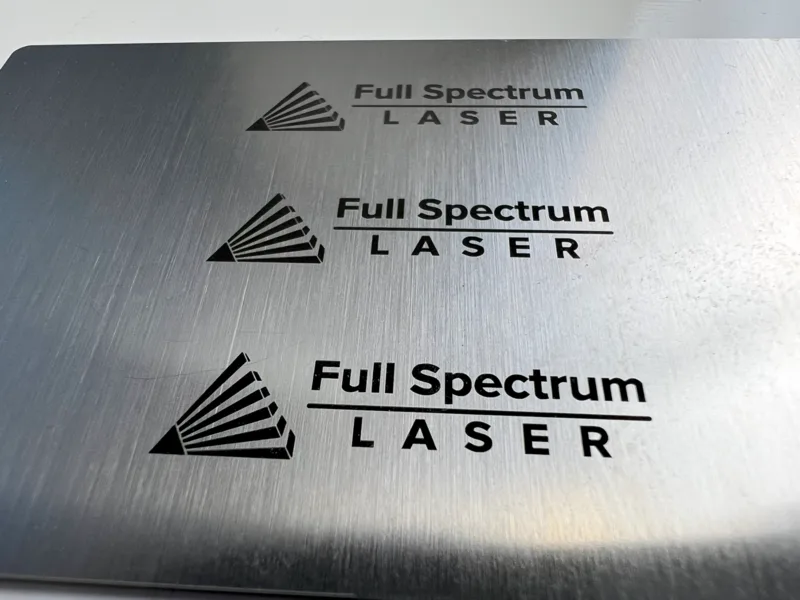
Pico black mark detail

Black Mark Detail

Increasing intensity at different power settings. Nanostructure geometry traps light — uniformly black from any viewing angle.
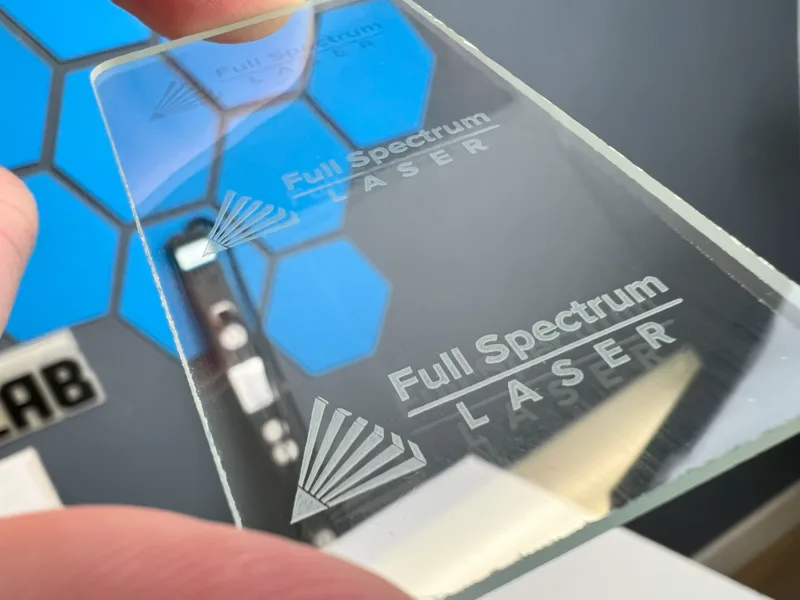
Pico subsurface glass

Subsurface Glass Marking

Two-photon nonlinear absorption marks inside glass at the focal point only. IR passes through glass but extreme energy density at picosecond focus creates a precise 3D voxel.
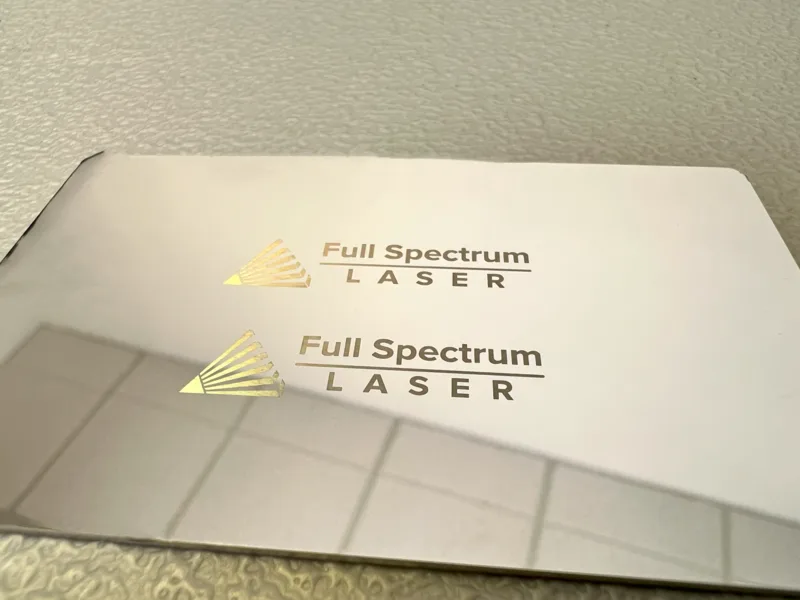
Pico color on stainless

Color on Polished Stainless

Gold and iridescent marks on mirror-polished stainless. Controlled oxide layer thinner than MOPA annealing.
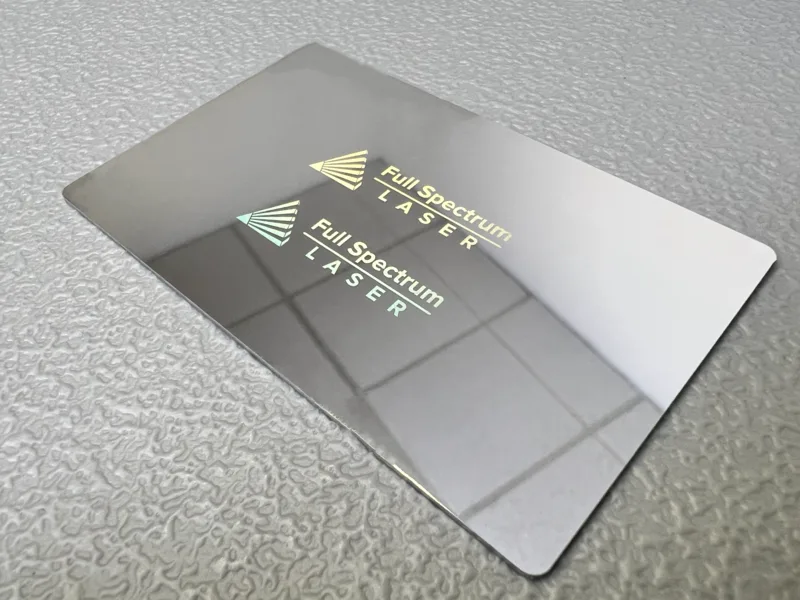
Pico color at angle

Angle-Stable Color

Picosecond surface restructuring produces color marks visible across wider viewing angles than MOPA thin-film interference.
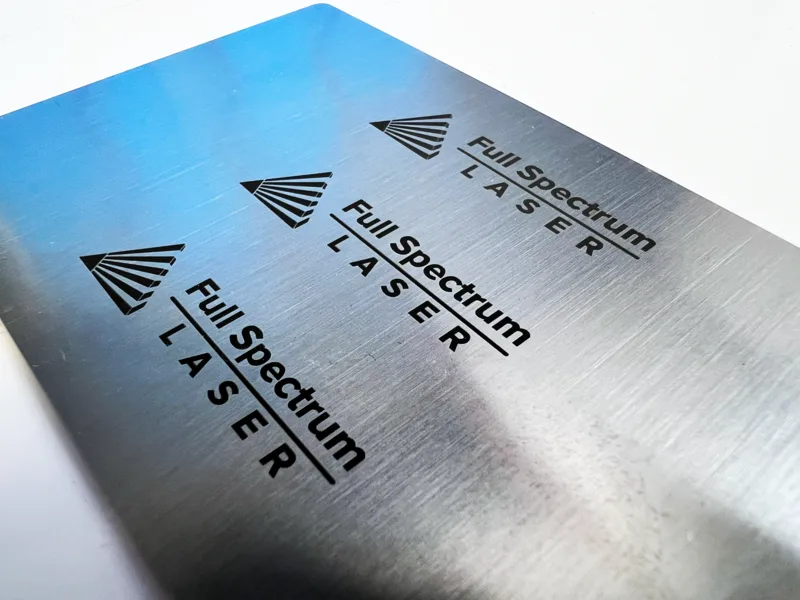
Pico multi-scale

Multi-Scale Marking

Consistent black density from large graphics down to small serial text across mark sizes.
Pico production marking

Production Black Marking

Production-ready marks on brushed stainless for medical devices, surgical tools, and industrial components.

10.6μm Cutting & Engraving

CO2

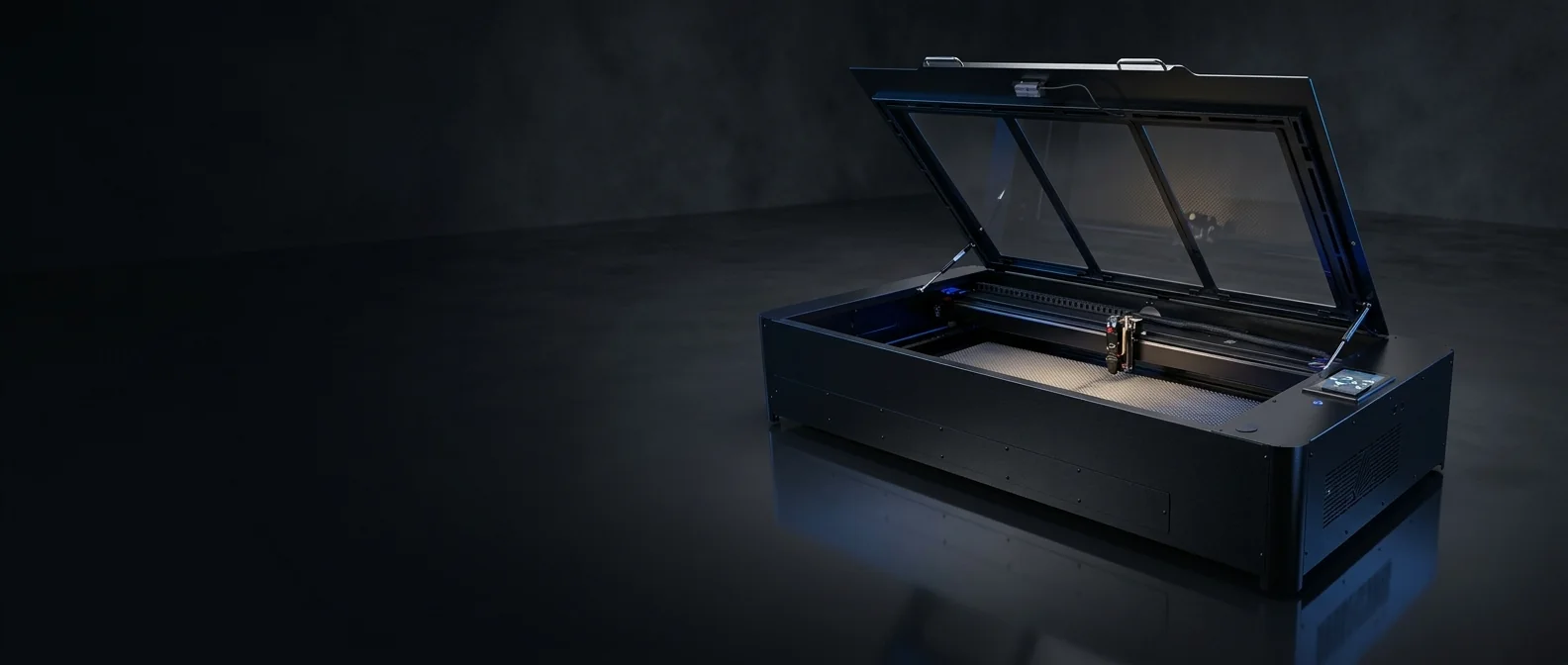
The workhorse for cutting and engraving organic materials. CO2 lasers excel at wood, acrylic, leather, fabric, paper, and rubber. Best-in-class engraving quality on wood and the only laser type that cleanly cuts clear acrylic.
Wood cutting & engraving Acrylic cutting Leather & fabric Paint removal on tumblers
FSL Muse Titan CO2 laser

Why teams choose CO2

  • Cuts wood, acrylic, leather, fabric, paper, foam, and rubber
  • Excellent engraving quality on wood — photo-realistic detail
  • Removes paint and coatings from tumblers without damaging metal underneath
  • Most applications on non-metals; for metals use UV or fiber

CO2 lasers operate at 10.6 μm wavelength which is strongly absorbed by organic materials. This makes them the default choice for cutting and engraving wood, acrylic, leather, fabric, paper, rubber, foam, and stone. Engraving quality on wood is outstanding and CO2 is the only practical way to cleanly cut clear acrylic. CO2 is also excellent at removing paint from tumblers and coated surfaces — the beam ablates the coating while leaving the metal substrate untouched.
Best fit

  • Signage, awards, gifts, and personalization shops
  • Prototyping and production cutting of sheet materials
  • Tumbler and drinkware customization

Common materials

  • Wood, plywood, MDF, bamboo
  • Acrylic, delrin, mylar, and most plastics (not PVC)
  • Leather, fabric, felt, paper, cardstock, foam, rubber

Typical outputs

  • Cut parts, engraved wood signs, and acrylic displays
  • Leather goods, fabric patterns, and paper crafts
  • Tumbler paint removal, glass engraving, stone etching

CO2 Application Samples

CO2 wood cutting and engraving

Wood

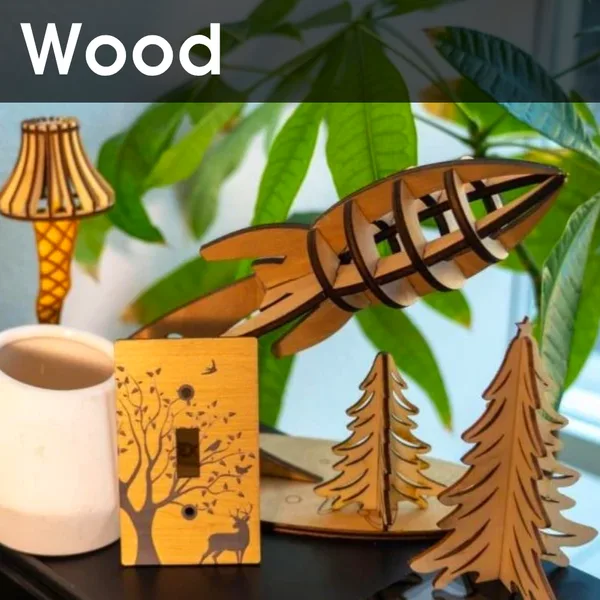
Intricate 3D cutting and engraving. Light switch plates, decorative fish, ornaments, and layered projects with clean edges.
CO2 acrylic cutting

Acrylic

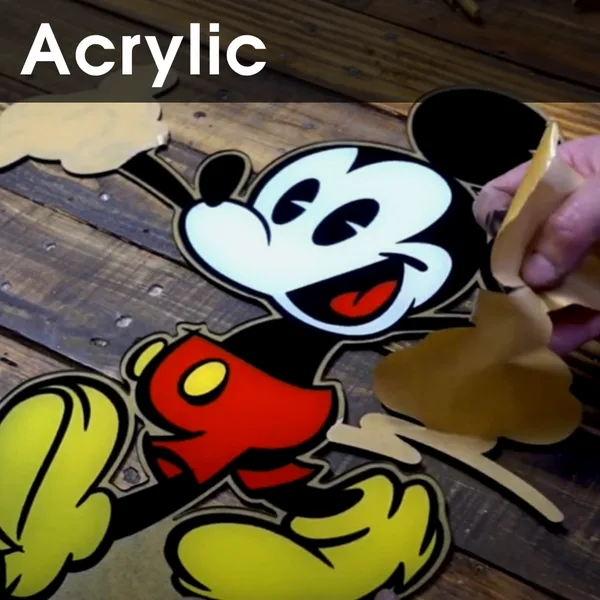
Multi-layer colored acrylic cutting and assembly. CO2 is the only laser that cuts clear acrylic with polished flame-finished edges.
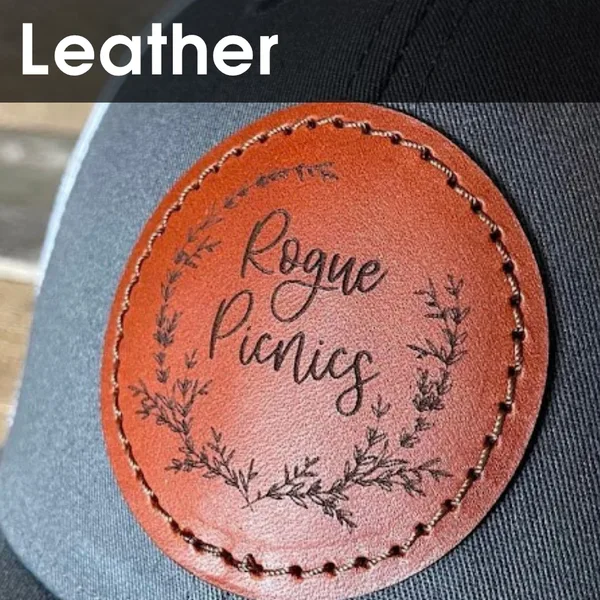
CO2 leather engraving

Leather

Engraving on leather patches for hats, bags, and accessories. Clean detail on natural leather with no charring.
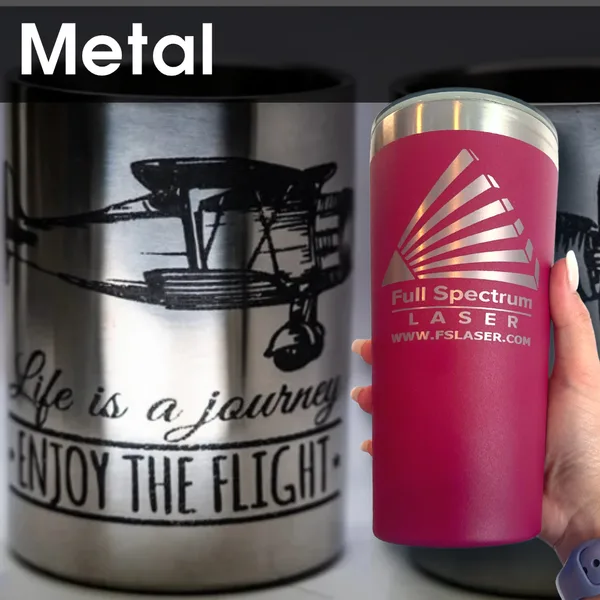
CO2 tumbler paint removal

Tumblers & Paint Removal

Removes paint and coatings from tumblers and drinkware without damaging metal underneath. Perfect for custom drinkware businesses.
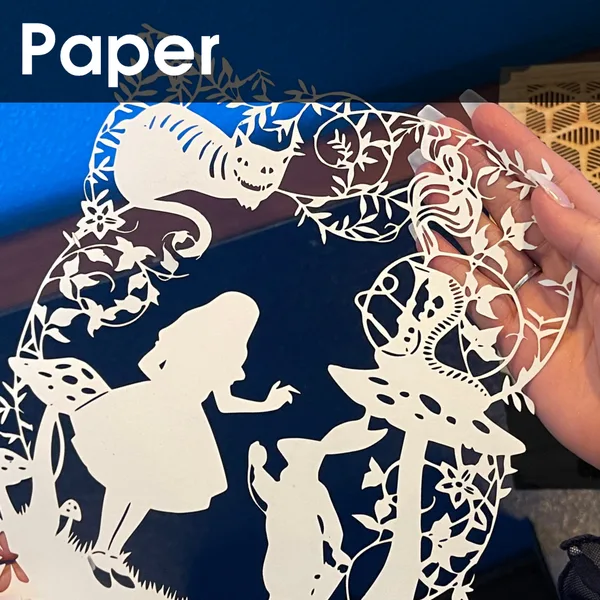
CO2 paper cutting

Paper & Cardstock

Intricate die-less cutting for invitations, paper art, and decorative pieces with detail impossible by hand.
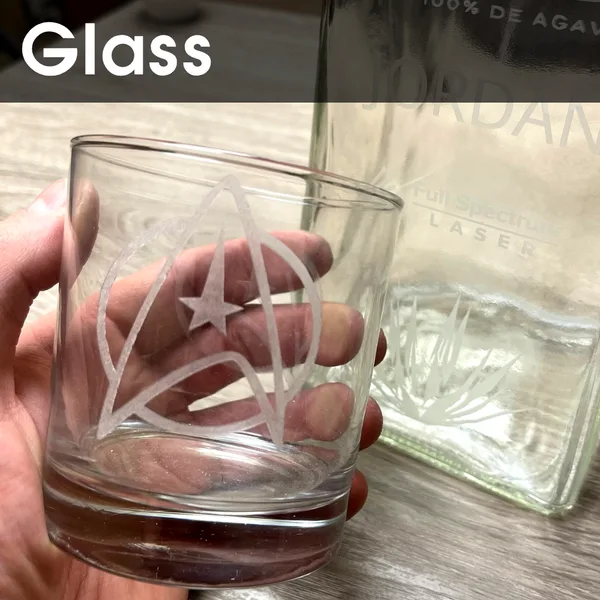
CO2 glass engraving

Glass Engraving

Surface engraving on drinkware and bottles. Frosted marks for logos, text, and decorative patterns.
CO2 polished stone engraving

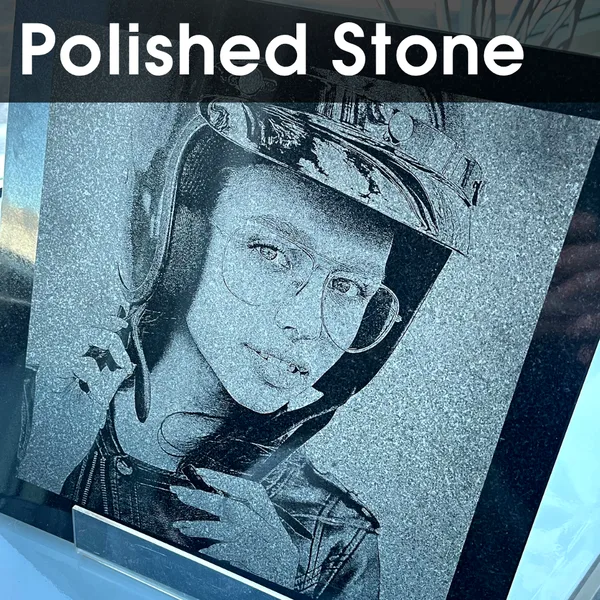
Polished Stone

Photo-realistic engraving on polished granite and marble for memorials, portraits, and architectural panels.
CO2 slate engraving

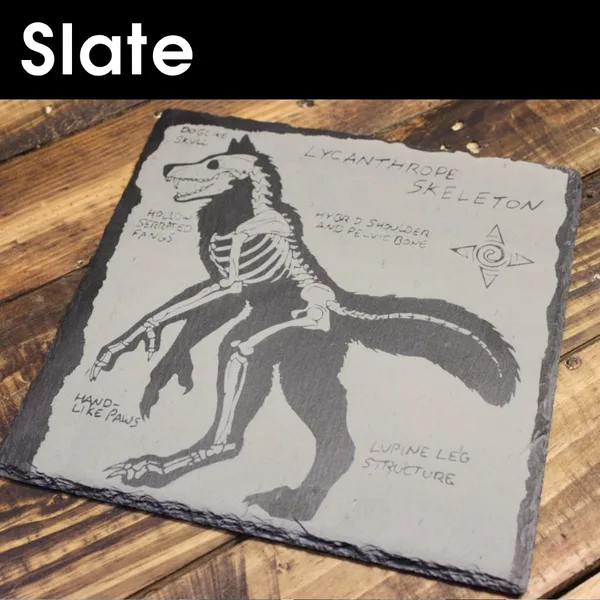
Slate

Detailed engraving on natural slate coasters, signs, and decorative tiles. The rough surface produces excellent contrast.
CO2 rubber stamp

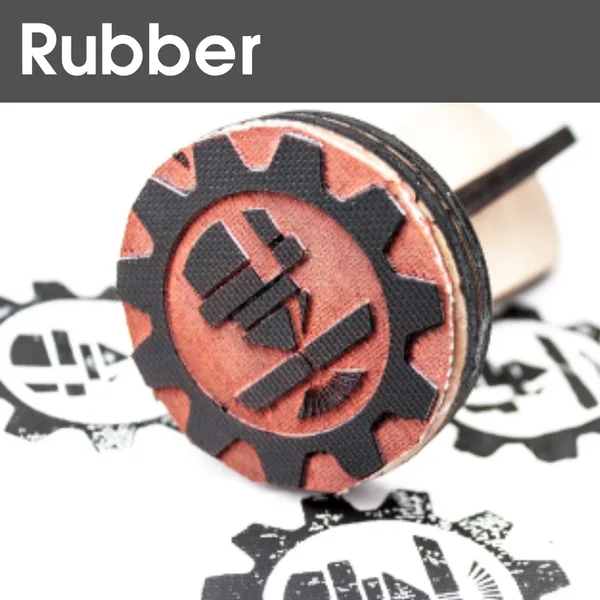
Rubber Stamps

Custom rubber stamps with fine detail. CO2 engraves and cuts rubber for stamps, gaskets, and seals.
CO2 fabric cutting

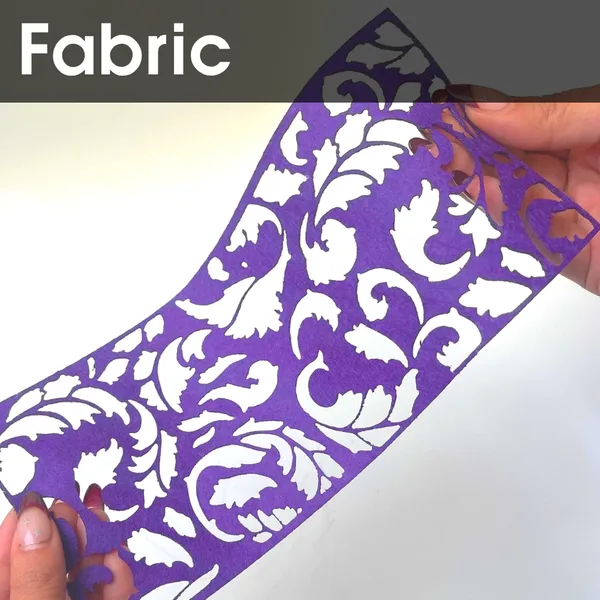
Fabric

Precision cutting of felt and textiles. Sealed edges prevent fraying — ideal for applique, fashion, and industrial textile work.
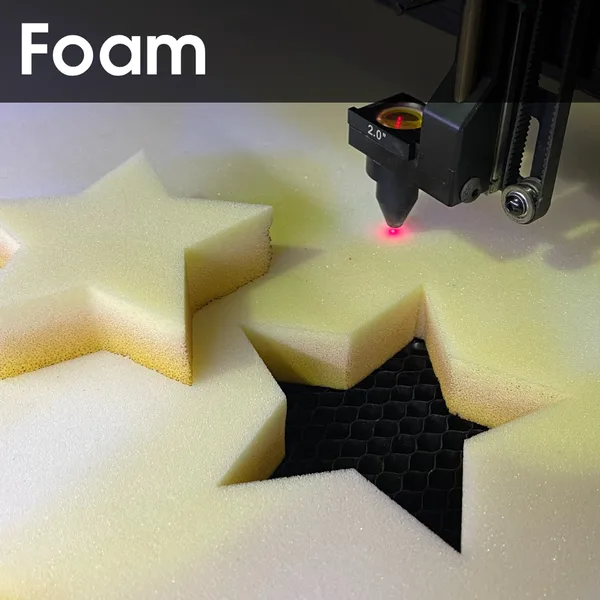
CO2 foam cutting

Foam

Clean cutting of EVA and packaging foam for custom inserts, cosplay props, and protective packaging.

1064nm Fiber Metal Cutting

Fiber Metal Cutting

Cuts most metals up to 3" thick. Tube and flat cutters available — from compact 4x4 enclosed systems for shops to full-size flatbed systems up to 35kW for production-scale cutting.
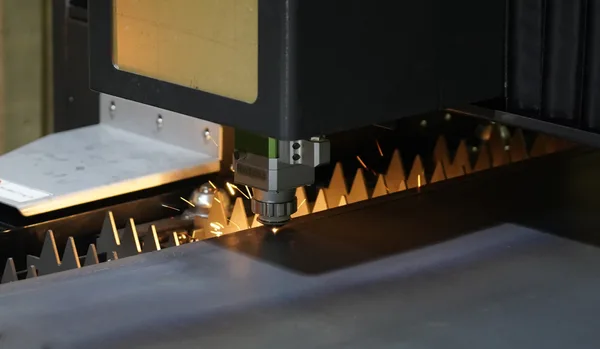
Sheet metal cutting Compact 4x4 ft 1kW to 35kW Mild steel, stainless, aluminum
FSL fiber laser metal cutter in action

Why fiber metal cutting

  • Cuts mild steel, stainless, aluminum, brass, and copper sheet
  • Compact 4x4 enclosed and open-frame models for smaller shops
  • Full-size flatbed systems from 4x8 up to 5x10 for production
  • Enclosed cutting head with autofocus and capacitive height sensing

FSL's fiber metal cutting line ranges from compact 4x4 enclosed and open-frame cutters (1kW–3kW) for small shops and startups, to full-size flatbed systems (4x8, 5x10) up to 35kW for production-scale fabrication. Unlike galvo-based fiber marking systems (MOPA), these gantry machines move the cutting head across the bed to cut through thick metal stock.
Best fit

  • Sheet metal job shops and fabrication businesses
  • Small shops starting with compact 4x4 cutters
  • Sign making, architectural metalwork, and industrial parts

Common materials

  • Mild steel, stainless steel, aluminum
  • Brass, copper, and reflective metals
  • Galvanized, pre-painted, and coated metals

Typical outputs

  • Cut parts, brackets, frames, and structural components
  • Jewelry blanks, charms, and intricate art cuts
  • Decorative metalwork, signage, and custom fabrication

Fiber Cutting Samples

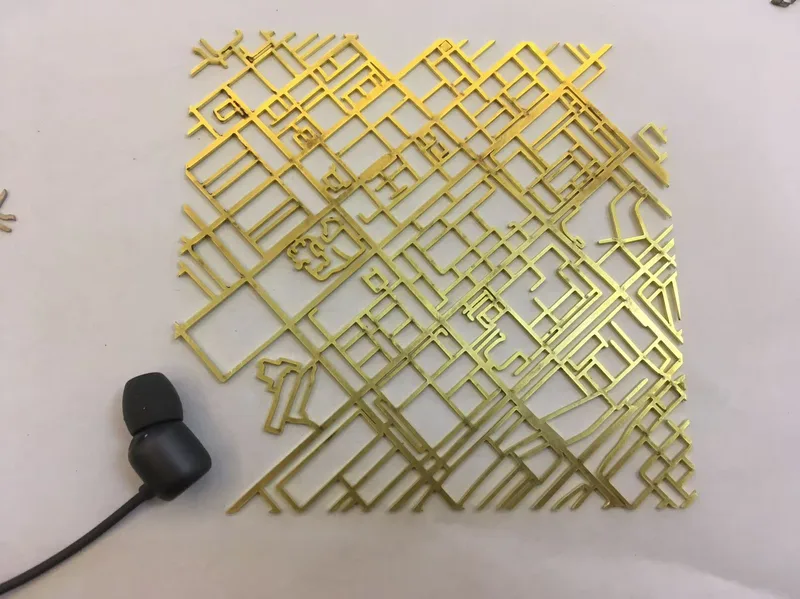
Brass city map cut

Brass Art — City Map

Intricate street-grid pattern cut from thin brass sheet. Fine lines and open areas demonstrate the precision of fiber cutting on reflective metals.
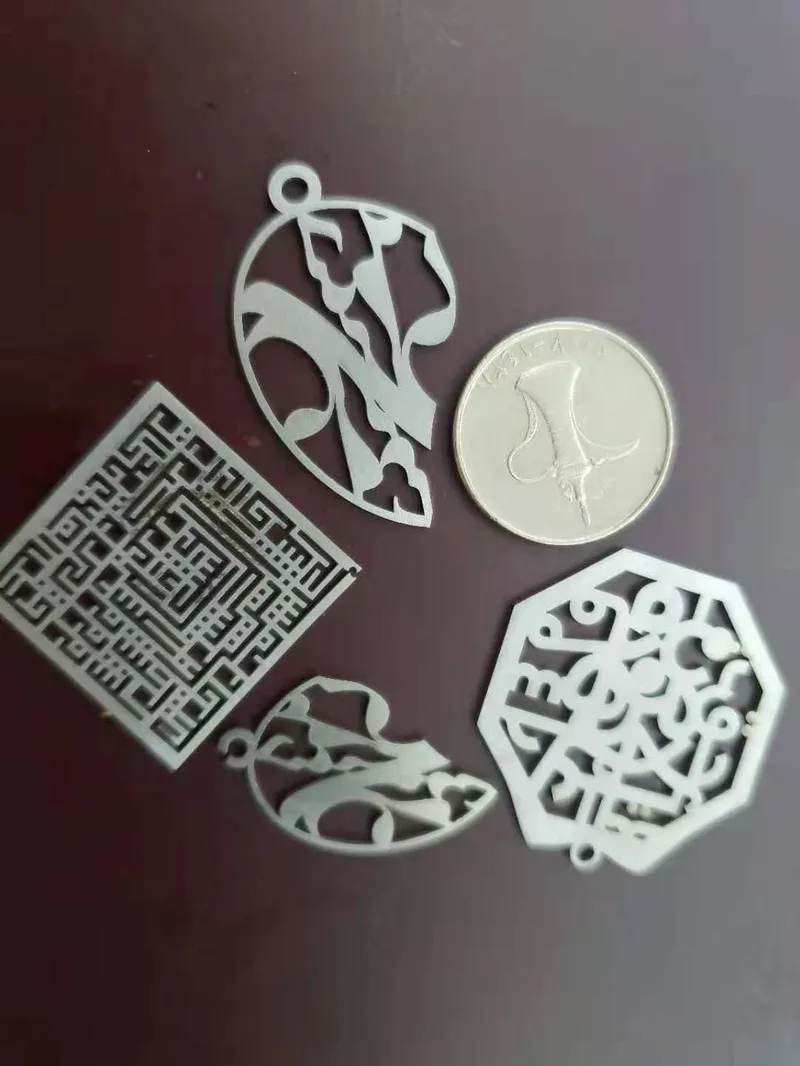
Steel jewelry pendants

Stainless Jewelry Pendants

Intricate filigree pendants and geometric charms cut from thin stainless sheet. Coin shown for scale — cuts are clean enough to wear as-is.
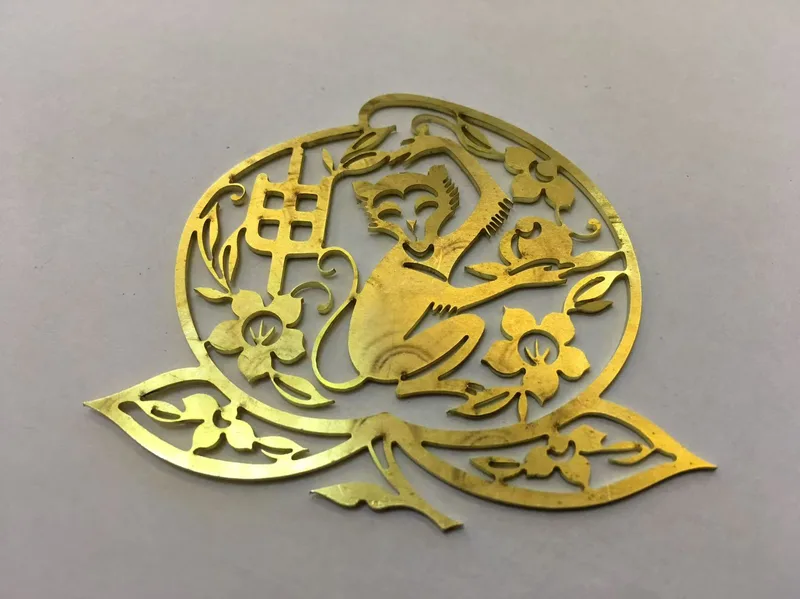
Brass zodiac cutout

Brass Decorative Art

Chinese zodiac cutout in brass sheet. Detailed curves, small openings, and decorative bridging demonstrate control on reflective material.
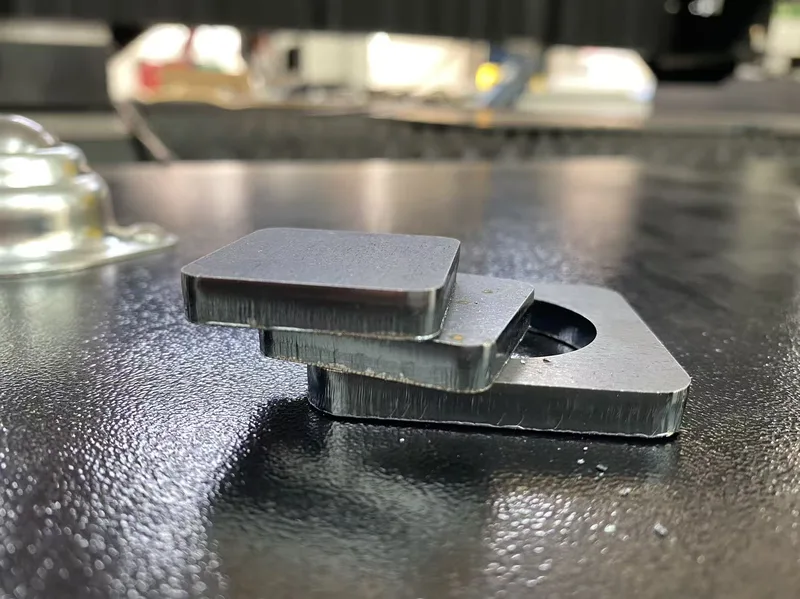
Thick steel part

Thick Steel Parts

Clean cuts through thick mild steel plate. Smooth edges with minimal dross — ready for welding or assembly without secondary finishing.
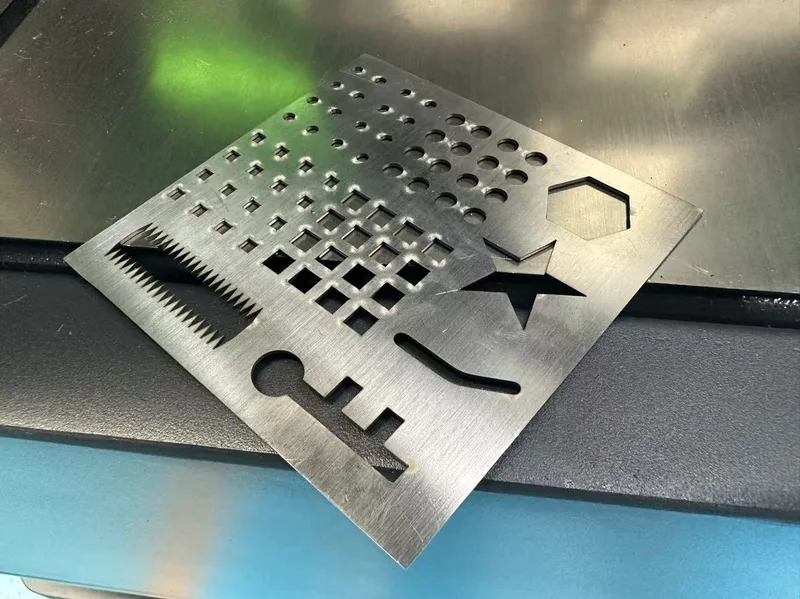
Steel test patterns

Precision Test Patterns

Material test plate showing various cut geometries — holes, slots, teeth, stars, and text. Used to validate kerf width and corner accuracy.
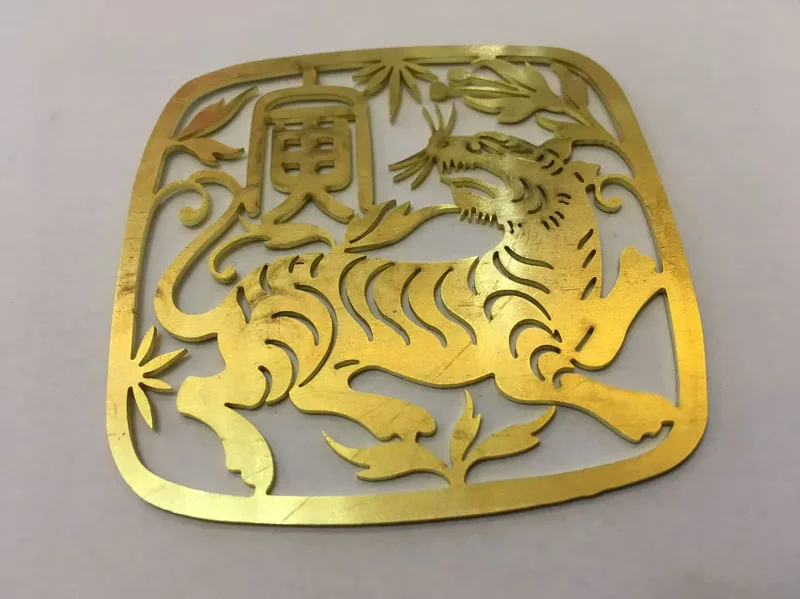
Brass tiger cutout

Brass Art — Tiger

Chinese zodiac tiger cut from brass with fine stripes and delicate bridging. Decorative metalwork for wall art, gifts, and framing.
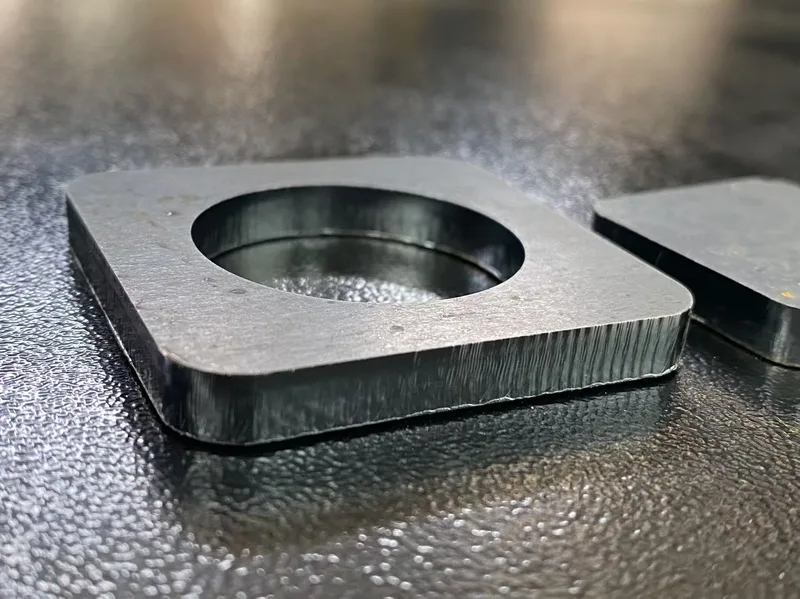
Thick steel precision cut

Thick Steel — Precision Hole

Clean circular bore through thick steel plate. Smooth internal walls with consistent kerf — suitable for bearing seats and shaft clearances.
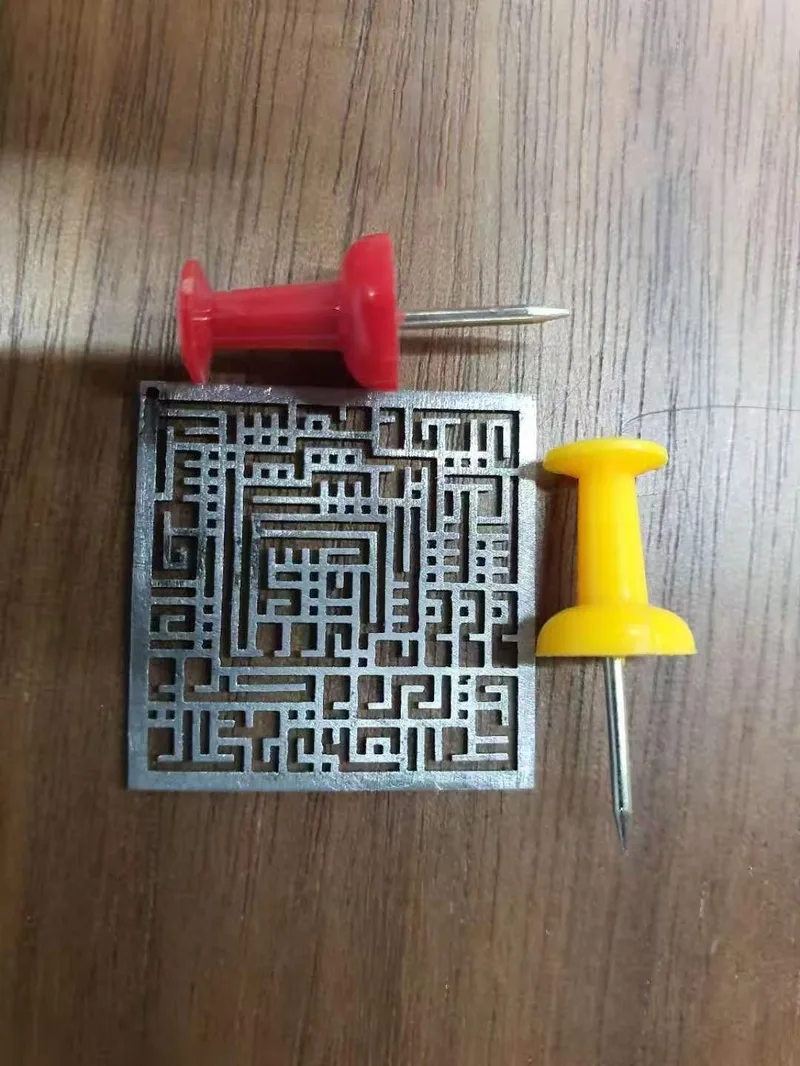
Micro steel maze

Micro Precision — Steel Maze

Tiny labyrinth pattern cut from thin stainless, shown next to push pins for scale. Sub-millimeter walls demonstrate galvo-class precision on a gantry.
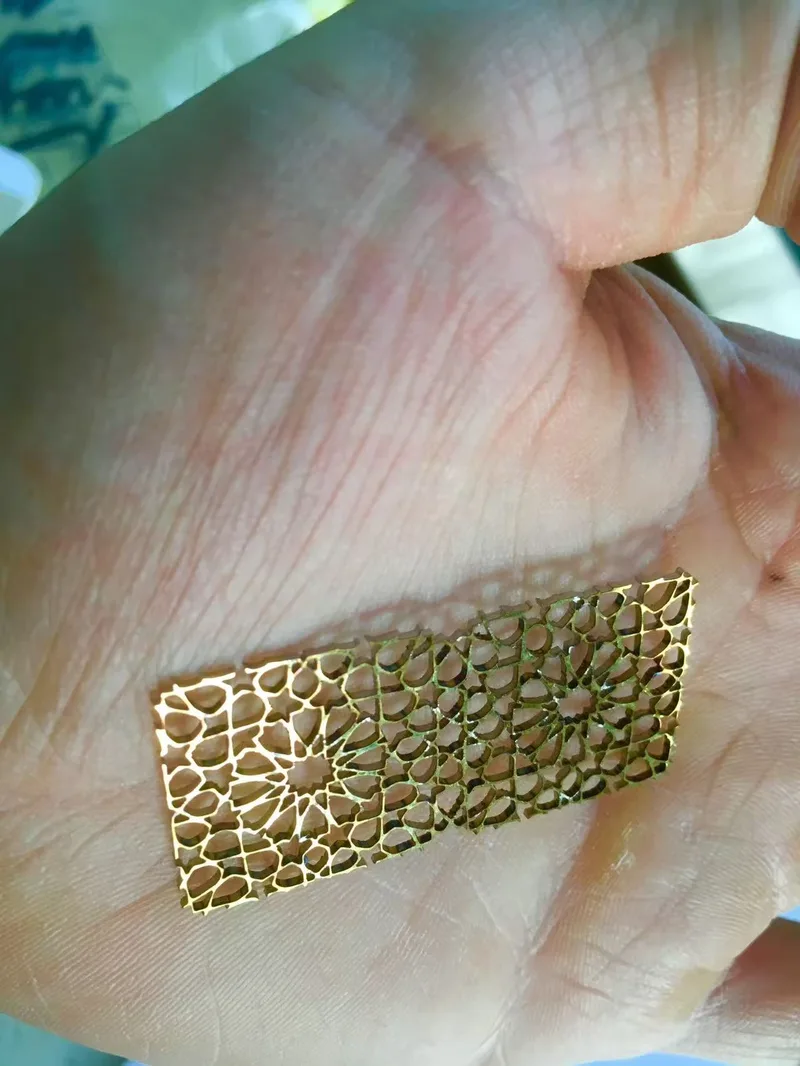
Copper micro pattern

Copper Micro Filigree

Tiny Islamic geometric pattern cut from copper sheet, held in palm for scale. Demonstrates fiber cutting on highly reflective copper with sub-mm detail.
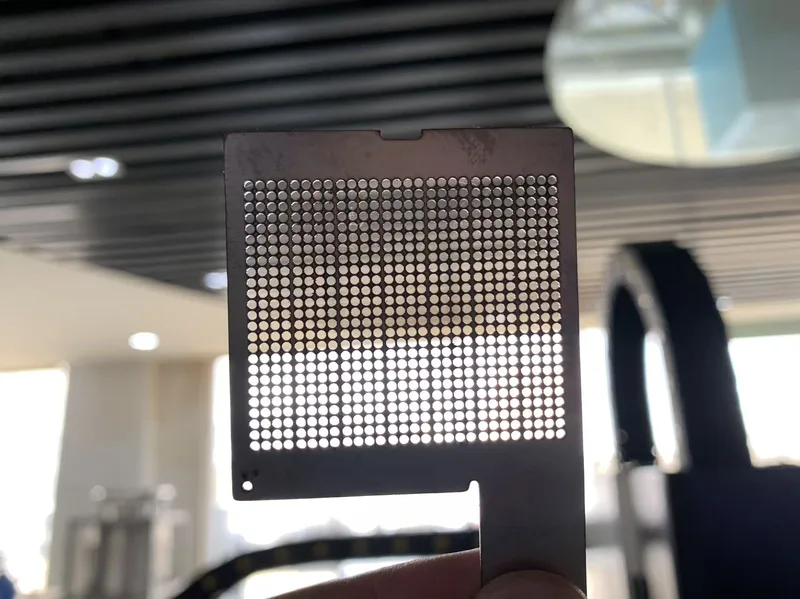
Steel screen stencil

Steel Screen & Stencil

Perforated steel screen with hundreds of precision holes. Industrial stencil and filter applications where consistent hole diameter matters.
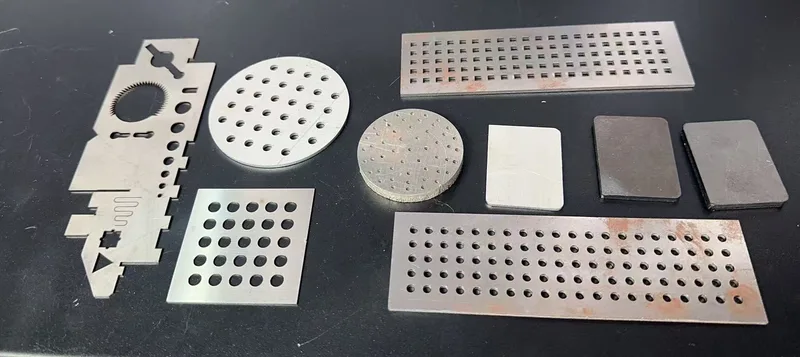
Cut parts assortment

Parts Assortment

Range of cut capabilities in one shot — perforated plates, screens, brackets, and test coupons in stainless and mild steel of various thicknesses.
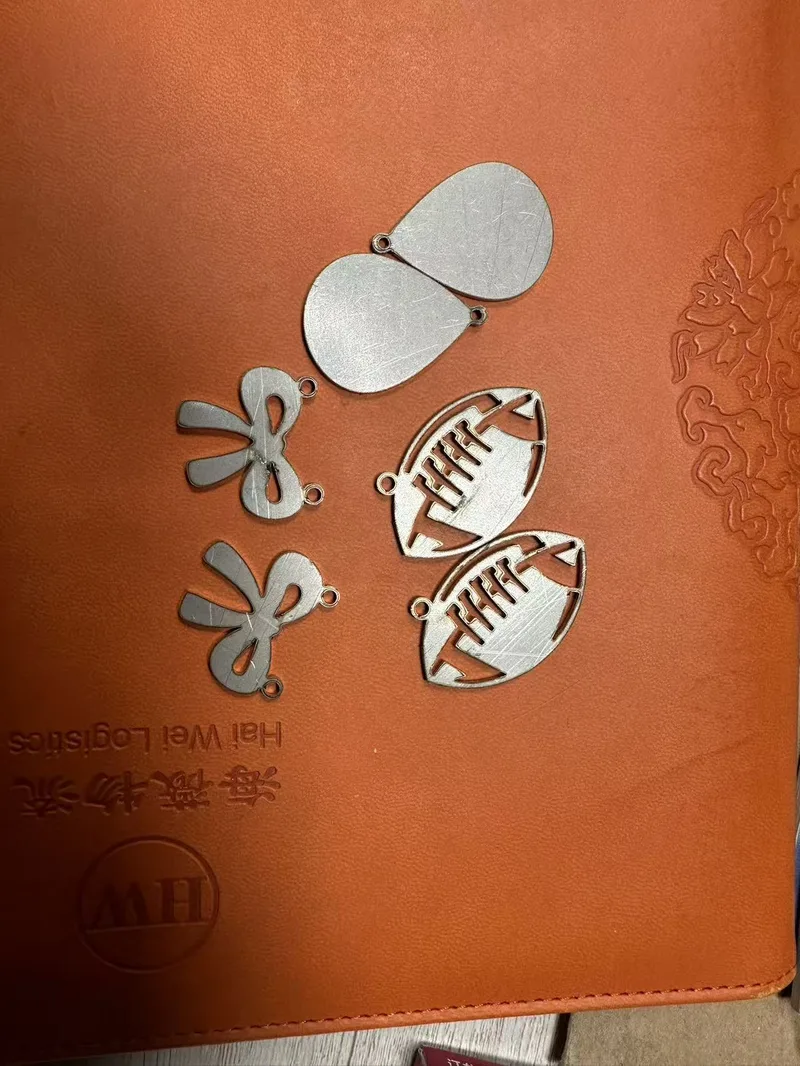
Steel earrings and charms

Earrings & Charms

Football charms, teardrop earring blanks, and decorative pendants cut from stainless sheet. Clean edges ready for polishing and assembly.
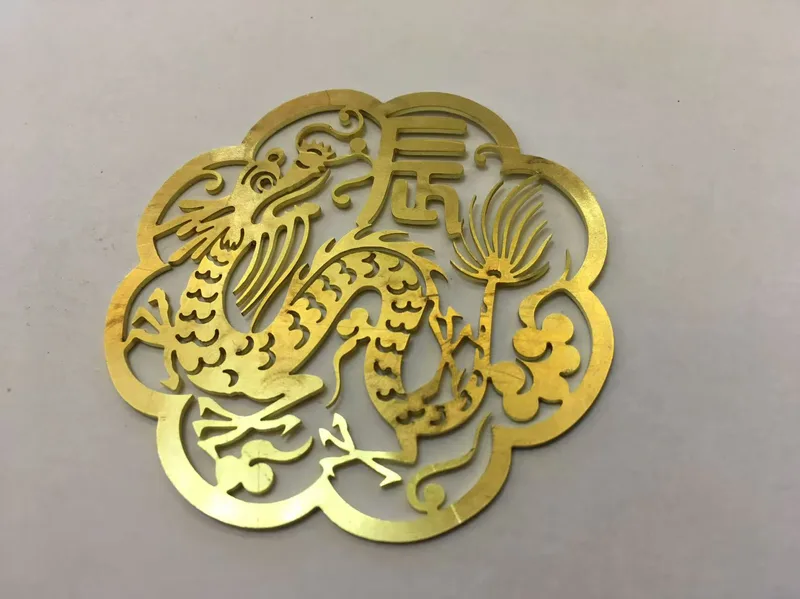
Brass dragon cutout

Brass Art — Dragon

Ornate Chinese dragon cutout in brass with scalloped border frame. Fine detail in scales and flowing curves demonstrates cutting on reflective metals.
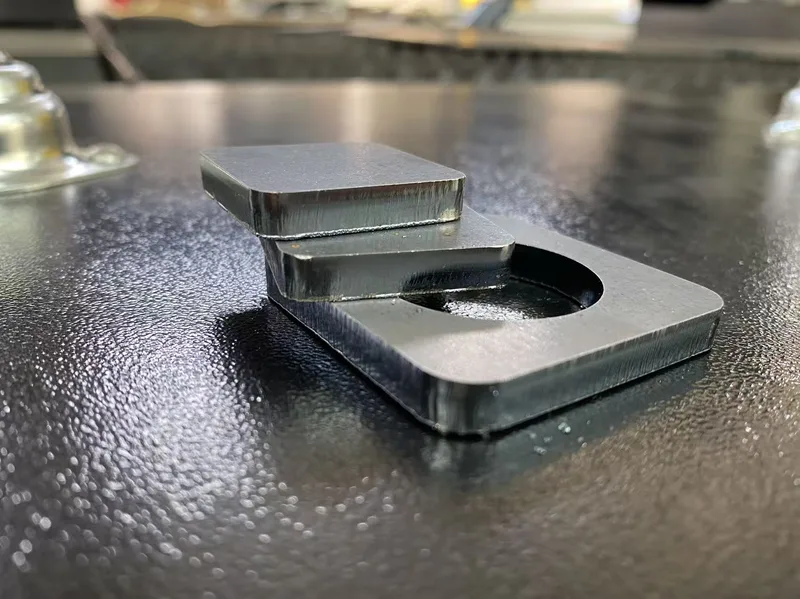
Thick steel machined part

Thick Steel — Industrial

Precision-cut thick steel part with clean pocket and bore. Straight walls and sharp corners suitable for tooling and fixture applications.

PLATFORM TECHNOLOGY

What Sets FSL Apart

The technologies behind our laser systems — from real-time motion control to AI vision alignment. Click any card to learn more.
6D SynchroScan

Continuous motion — no tiles, no stitching, true on-the-fly processing

+

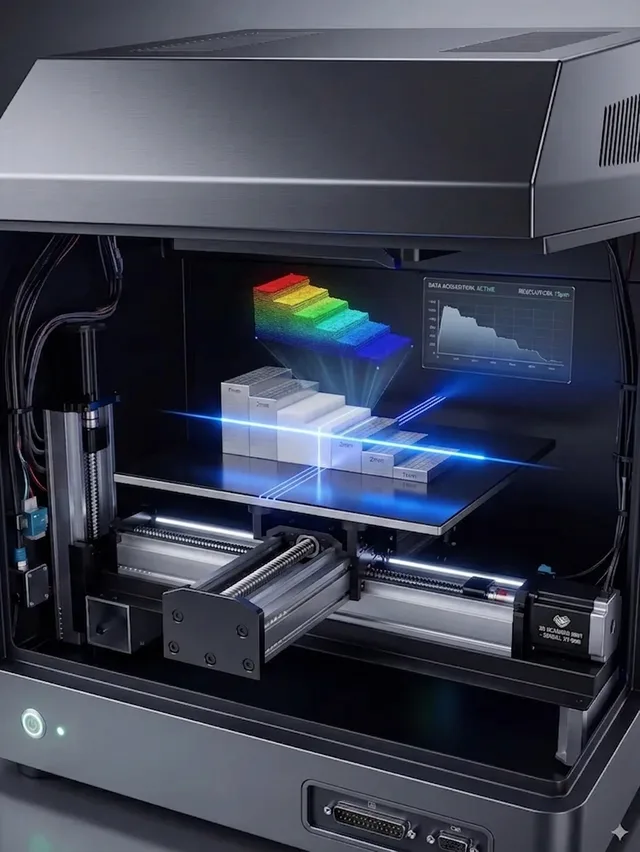
The 6D SynchroScan combines a 3-axis galvo scanner with a 3-axis EtherCAT servo platform, enabling large work areas to process in one continuous move instead of stepping through stitched tiles. Over 2x faster than stitch-scan workflows with 10 µm camera-to-laser calibration accuracy.

>2x
Faster than stitch-scan
10 µm
Camera-to-laser accuracy
6 Axes
Synchronized motion

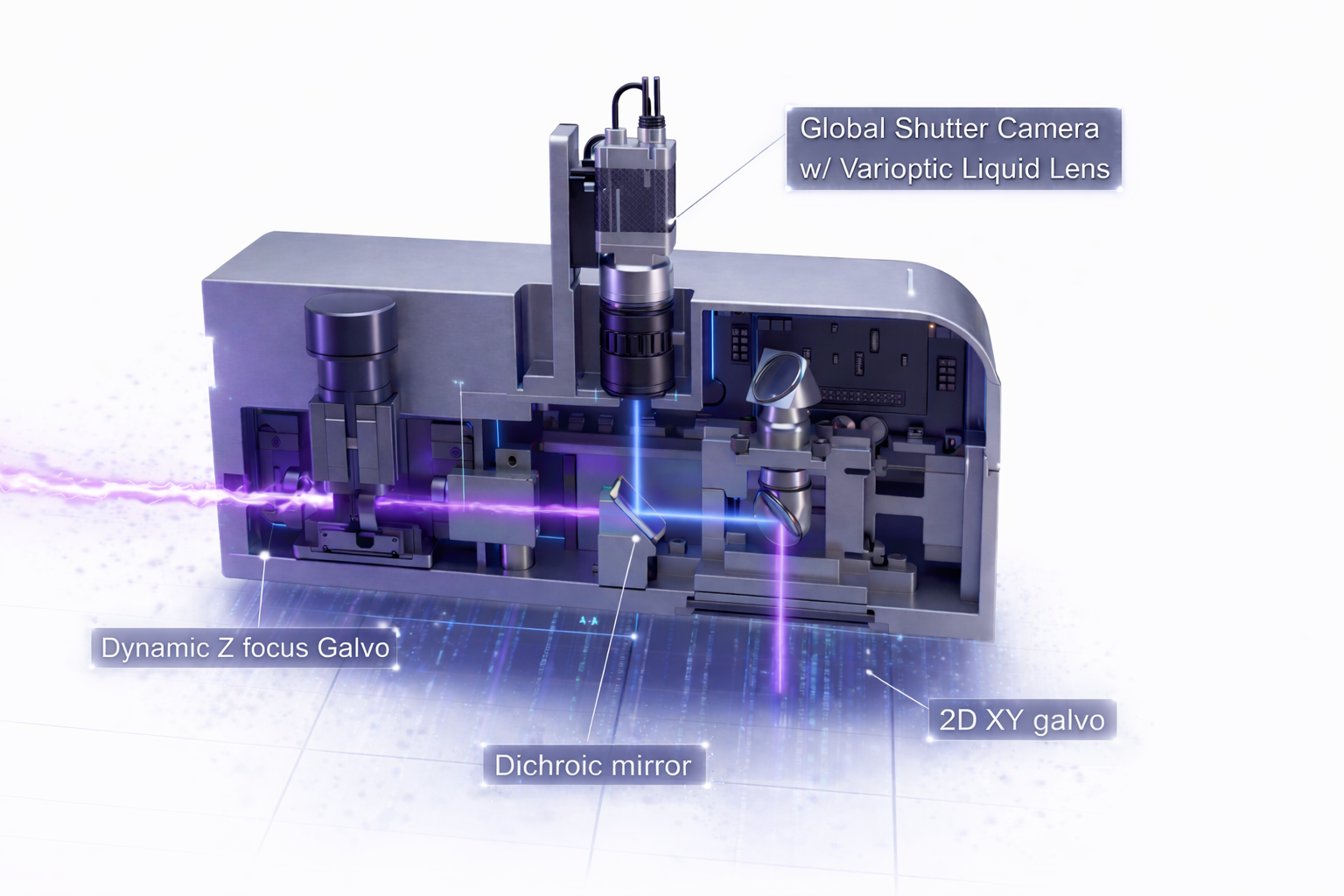
Coaxial Camera with Liquid Lens

View through the galvo mirrors — 2µm placement, zero parallax

+
Coaxial camera optical path diagram

The Coaxial Camera views along the exact same optical path as the laser beam. Unlike external overview cameras that view from an angle, this camera looks through the galvo mirrors themselves — what the camera sees is exactly where the laser will fire. No parallax, no perspective distortion.

  • 2μm placement accuracy — micrometer-precise laser alignment
  • Liquid lens autofocus — electronic focus, no moving parts. When image is in focus, laser is in focus
  • 3D measurement — use focus distance to measure surface height
  • Best with True 3D Galvo — no f-theta lens means zero distortion in the coaxial view
View product →

True 3D Dynamic Focusing Galvo

Third-axis telescope focusing — no f-theta lens required

+

A third galvo axis moves an expansion lens in a telescope configuration for true software-controlled 3D focusing at every point. Unlike "focus shifter" type 3D galvos that still need an f-theta lens, the True 3D system has no f-theta lens — eliminating field distortion entirely.

  • Software-controlled focus — every point focused independently in 3D space
  • No f-theta lens — no field curvature, no barrel/pincushion distortion
  • Curved surface processing — engrave on non-flat objects with consistent focus
  • Coaxial camera synergy — no lens distortion after mirrors means perfect vision alignment
View product →

EtherCAT Real-Time Motion Control

Industrial fieldbus for deterministic multi-axis servo coordination

+

FSL uses EtherCAT — the same industrial fieldbus used in semiconductor fab equipment and CNC machines — for real-time servo motor control. Sub-microsecond synchronization across all axes ensures smooth, precise motion at high speeds.

  • Deterministic timing — guaranteed sub-microsecond cycle times
  • Multi-axis coordination — XY gantry, Z-axis, rotary, and galvo all synchronized
  • Industrial standard — same protocol used in semiconductor, automotive, and aerospace manufacturing
  • High-speed communication — 100 Mbit/s with hardware-level synchronization

AI Vision & Object Detection

Automatic part detection, alignment, and 3D surface scanning

+

FSL's AI vision system uses machine learning to automatically detect objects on the work surface, determine their outlines, and align laser operations precisely. Combined with 3D depth cameras, the system maps surface topology for autofocus across irregular shapes.

  • Automatic object detection — place parts anywhere, the camera finds them
  • 3D surface mapping — ZCam captures depth at 0.1mm accuracy for autofocus
  • 90 fps global shutter — real-time vision feedback during processing
  • WLC calibration — Whole Lens Correction maps the full workspace to <10µm accuracy
View vision systems →

3D Blue Line Scanner

0.02mm accuracy structured light scanner with laser-aligned depth mapping

+
Blue laser line scanner profiling a metal surface

Structured blue light 3D line scanner integrated with our 90fps Global Shutter Camera system. Projects a precision blue laser line across the work surface to capture real-time 3D surface profiles with 0.020mm Z accuracy over a 100x100mm field of view.

  • 0.020mm Z accuracy — structured light triangulation for precise surface mapping
  • 100x100mm field of view — captures detailed depth maps across the scan area
  • 90 fps global shutter — real-time 3D profiling during processing
  • Laser-aligned bounding boxes — depth data maps directly to galvo coordinates for perfect Z-compensation
  • SynchroScan integration — continuous scanning during servo travel for full-area 3D capture
0.020mm
Z accuracy
100x100mm
Field of view
90 fps
Global shutter camera

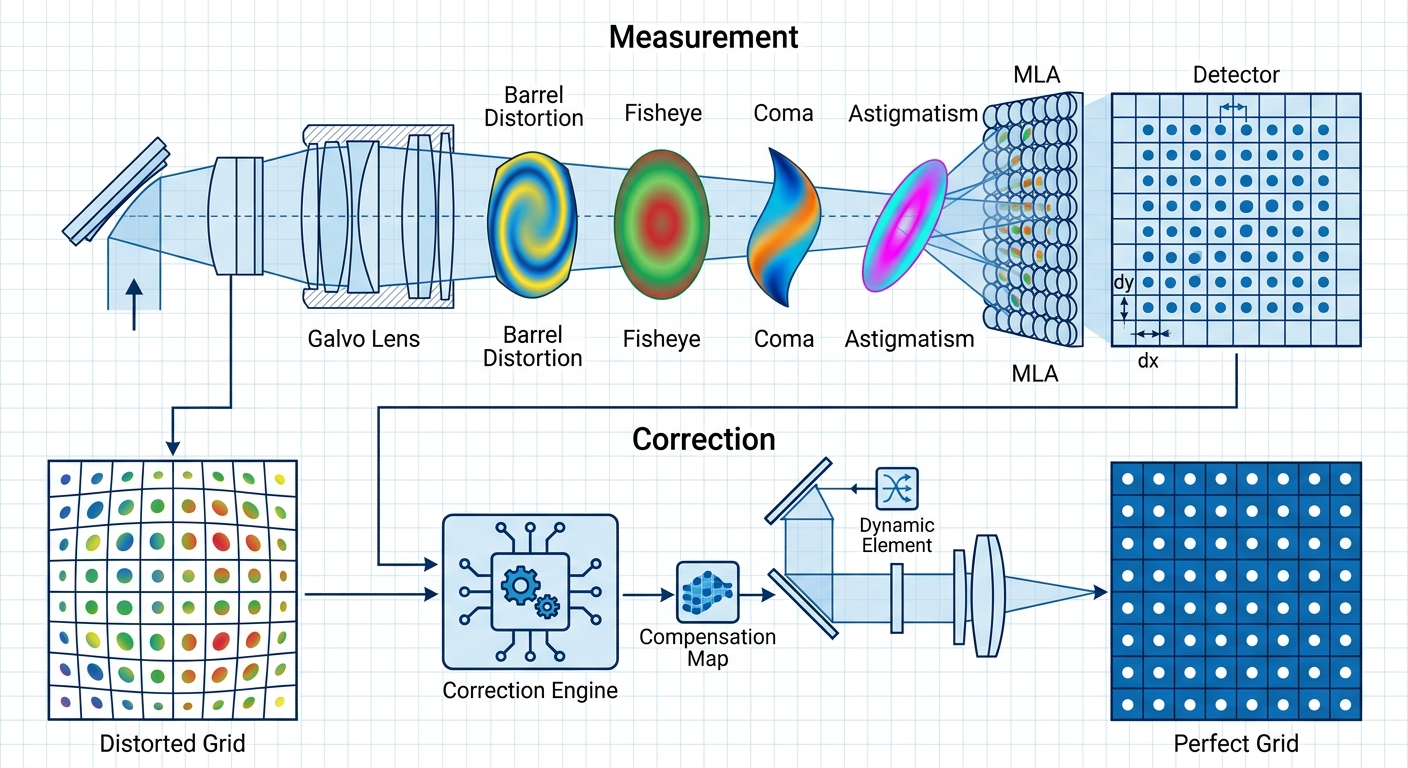
Whole Lens Correction (WLC)

Sub-20μm accuracy via Shack-Hartmann wavefront sensing

+
Whole Lens Correction diagram

Whole Lens Correction (WLC) handles all lens distortions — barrel, fisheye, coma, and astigmatism — using our Shack-Hartmann wavefront sensor. The sensor measures the actual wavefront passing through the galvo lens, builds a compensation map, and corrects every coordinate in real time for the most accurate laser-to-camera placement in the industry.

  • Shack-Hartmann wavefront sensor — measures barrel distortion, fisheye, coma, and astigmatism across the full field
  • Sub-20μm accuracy — camera-to-laser placement verified across the entire workspace
  • Full-field correction — not just center calibration; every point in the work area is compensated
  • Automatic compensation map — RetinaEngrave applies corrections in real time during processing

RetinaEngrave Software

Browser-based control — works on Windows, Mac, Linux, tablets

+

RetinaEngrave (RE5) is FSL's browser-based laser control software. No installation required — open a browser on any device and start designing. Includes AI-powered object detection, vector editing, raster processing, and full machine control.

  • Browser-based — runs on any device with Chrome, Safari, or Firefox
  • AI object detection — automatically trace outlines of placed objects
  • Included free — no subscription, no license fees with every FSL system
  • Camera integration — live workspace view with drag-and-drop positioning
Learn more →